
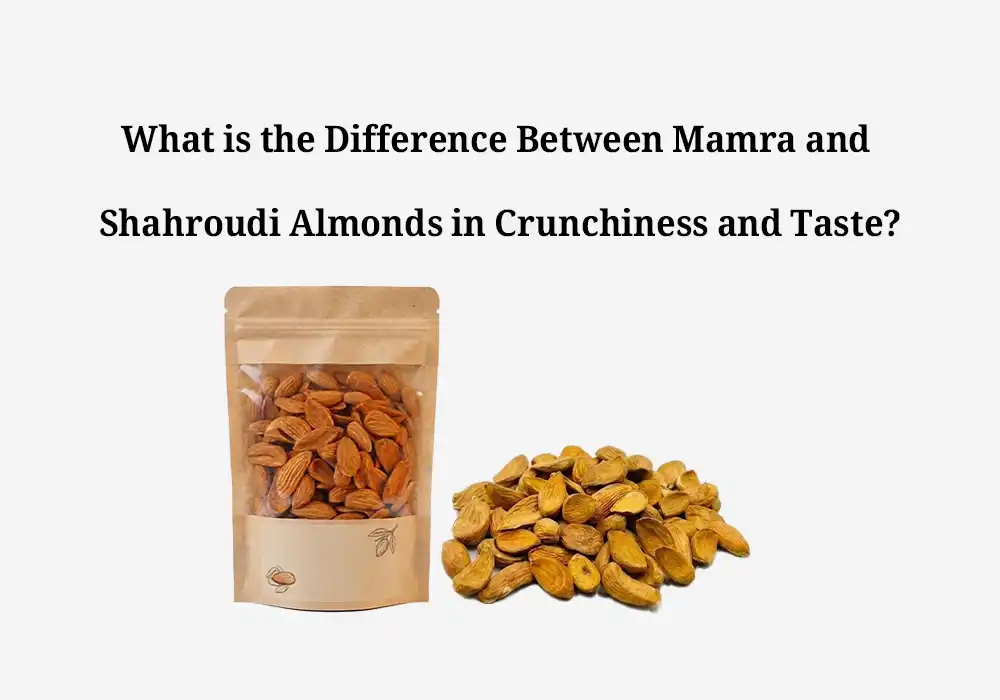
What is the Difference Between Mamra and Shahroudi Almonds in Crunchiness and Taste? (A Complete & Very Simple Guide)
When you search the big dry fruit markets for wholesale buying, bakery supplies, or exporting almonds to India, you will probably hear two names more than any other: Mamra Almonds (the undisputed, highly-priced king of the market) and Shahroudi 12 Almonds (a high-quality almond with a much more wallet-friendly price).
Many international buyers, bakers, and even families ask us: "Are these two almonds really that different in taste and mouthfeel to have such different prices? If we want to buy almonds for a luxury party or for our bakery workshop, which one is tastier and makes more financial sense?"
In this comprehensive and friendly article, we want to sit down like good friends, put these two valuable nuts side by side, and explain exactly what happens in your mouth regarding crunchiness, natural oil, and sweetness when you eat them.
1. The Difference in Taste: Natural Butter vs. Classic Nutty Flavor!
The very first thing we notice when eating an almond is how it tastes on the tongue. The flavor of an almond depends directly on the amount of "natural oil and healthy fats" inside it.
-
Taste of Mamra Almond (Sweet & Buttery): Authentic Saman Mamra almonds have over 50% natural oil! This means half the weight of the nut you eat is pure healthy fat. Because of this, when you chew Mamra, a deeply sweet, rich, and "natural butter-like" flavor fills your mouth. One of the best things about Mamra is that you will not find even a single bitter nut in it (100% sweet guarantee). To know why people in India love this taste so much, read Health Benefits of Mamra Almonds & Why They Are Popular in India.
-
Taste of Shahroudi Almond (Mild & Nutty): Shahroudi almonds (especially the Shahroudi 12 grade) have a bit less oil (about 40% to 45%). Because of this, its taste is milder and gives you the classic, lovely "ordinary nut" flavor. In a bag of Shahroudi almonds, you might sometimes find a few bitter nuts (about 1% to 3%), which is completely normal for regular home use, but it does not have the rich buttery taste of Mamra.
2. The Difference in Crunch & Texture: Melting vs. Snapping!
The texture of the almond (meaning how hard or soft it feels when we bite it) is very important for many people and especially for sweets factories.
-
Mamra Crunchiness (Crisp & Melting): Because Mamra is full of natural oil, its texture is very delicate, crisp, and fragile. When you bite into it, it breaks very softly under your teeth. Instead of feeling like hard wood, it quickly mixes with your mouth's moisture and melts. This softness makes it the best choice for older people and children. To learn more about its amazing features, read What is Mamra Almond and Why is it the Most Expensive?.
-
Shahroudi Crunchiness (Hard & Bone-Like): Shahroudi belongs to the family of stone almonds. Its texture is denser, drier, and a bit harder. When you bite it, it makes a loud "snap" or "crunch" sound, and you have to chew it a bit more. This hardness is not a bad thing at all! Actually, bakery workshops love this hard crunch because when they slice it or put it inside baklava, it holds its shape perfectly! For a closer comparison, read Rabie vs. Shahroudi Almonds: Guide for Bulk Buyers.
3. Appearance: How to Tell Them Apart at First Glance?
If they put both almonds in front of you, you can tell the difference even without tasting them:
- Mamra Look: Its color is very bright and golden. It has very deep wrinkles and grooves on its skin. Also, most Mamra kernels (about 70%) are twin pairs (one side is flat and the other is curved).
- Shahroudi Look: Shahroudi kernels are usually longer, pointier, and a bit wider. Their skin is darker brown, and the lines on it are very smooth and shallow. Also, twin kernels are much rarer in Shahroudi. To see a full comparison of Iranian varieties, read Difference Between Saman Mamra Almond and Other Iranian Varieties.
Simple Summary Table: Mamra vs. Shahroudi
| Feature | Saman Mamra Almond | Shahroudi Almond |
|---|---|---|
| Natural Oil & Fat Level | Very High (Over 50% healthy fat) | Medium (About 40% to 45% fat) |
| Taste on the Tongue | Very sweet, rich, and naturally buttery | Classic, mild nutty flavor |
| Crunchiness & Texture | Crisp, delicate, and melts in the mouth | Hard, dense, with a loud snapping crunch |
| Chance of Bitter Nuts | Zero percent (100% sweet guarantee) | Small chance of 1% to 3% bitter nuts |
| Best Use & Market | Luxury export to India & health tonic | Bakeries, almond powder, and daily home snacking |
4. Which Almond is Better and More Economical for Us?
Now that we know the difference in taste and crunch, the big question is: Which one should we spend our money on?
- If you want luxury quality and export to India: Indians and Arab buyers in the Gulf only want the buttery taste and >50% oil. So for luxury businesses, Mamra Almond is your only choice.
- If you have a bakery or want a budget-friendly price: Mamra is very expensive. If you want to make almond powder, baby porridge, or bake sweets for daily use, Shahroudi Almond is the best and most economical substitute! It tastes great and saves you a lot of money. To do the math on saving money, read Paper-Shell Moheb vs. Stone Almonds: Economic Value Analysis.
Why Walmondhe is the Best Supplier for Both Almonds
The Walmondhe export group, with years of experience right inside Iran's orchards, brings you both types of almonds with the highest quality directly from the farmers.
- Clean Sorting: Whether you want luxury Mamra or economical Shahroudi, we use modern machines to remove all broken, small, or bad nuts so you get a 100% uniform bag.
- Vacuum Safe Packaging: To make sure the buttery taste of Mamra and the hard crunch of Shahroudi are not lost during shipping, all our goods are packed in airless vacuum bags.
To get today's direct factory price, free export advice, and order Mamra Almonds, Shahroudi 7, or Shahroudi 12, easily contact us right now:
- Direct WhatsApp Message: 09136667618
- Direct Phone Call: 09136667618
- Why B2B buyers trust us globally: Read Why Walmondhe is the Best Choice for Wholesale Almonds & Exports