
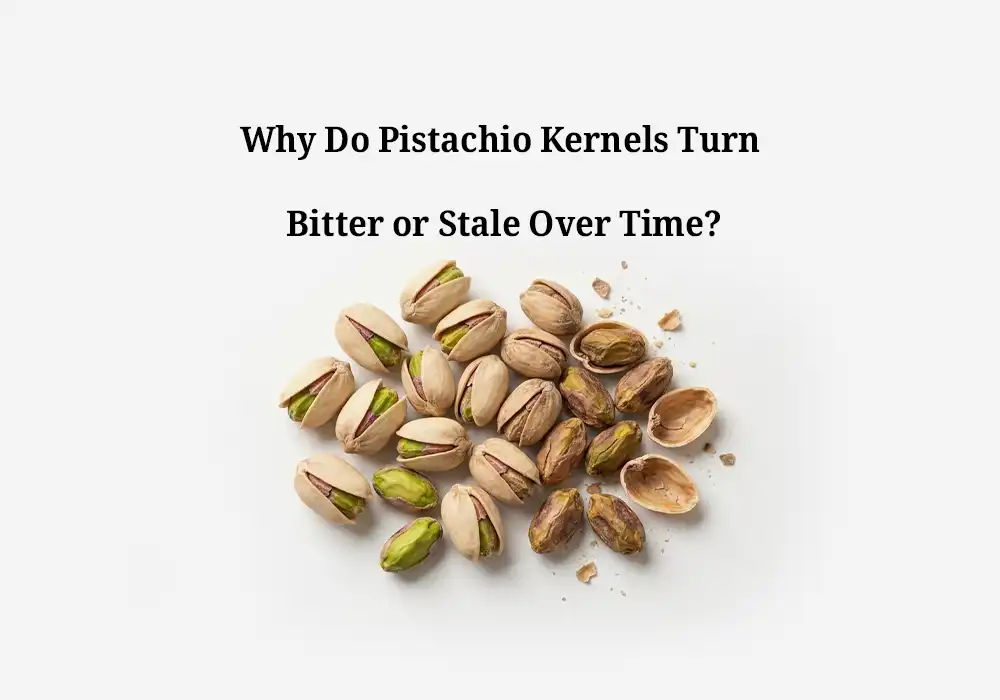
Why Do Pistachio Kernels Turn Bitter or Stale Over Time? (A Biochemical Dissection of Flavor Decay)
Imagine reaching eagerly into your pantry to grab a jar of premium shelled pistachio kernels—perhaps to garnish an aristocratic dessert or to enjoy as a healthy afternoon snack. Visually, the kernels still appear reasonably vibrant and intact. Yet, the exact millisecond you bite down, instead of that heavenly, sweet, buttery explosion you anticipated, your palate is violently assaulted by a sharp, harsh bitterness, a soapy aftertaste, and an unpleasant odor vaguely reminiscent of old cooking oil or wet paint! This deeply disappointing sensory betrayal instantly raises a profound scientific question: "How does a dry, seemingly shelf-stable seed spoil and turn bitter without showing a single trace of visible mold?"
Countless consumers operate under the dangerous illusion that dry fruits and tree nuts are biologically immortal, assuming they can be abandoned in a warm kitchen cabinet for years without consequence. However, in the rigorous discipline of food chemistry, a pistachio kernel is absolutely not an inert, static object; it is a hyper-active biological matrix densely packed with volatile, delicate plant lipids. The very moment a kernel is liberated from its protective bony shell, an invisible, relentless chemical countdown begins.
In this profoundly comprehensive, analytical, and scientific article, we will peer directly into the molecular structure of the pistachio kernel. We will decode the destructive phenomenon of "Lipid Oxidation," expose the four environmental assassins of nut freshness, differentiate between simple stale bitterness and lethal Aflatoxin poisoning, and provide you with the ultimate preservation protocol to lock in day-one freshness for up to a year.
1. The Biochemistry of Bitterness: Lipid Oxidation (Rancidity)
Over 50% of the total mass of a premium pistachio kernel is composed of natural plant oils and fats. The vast majority of these lipids are classified as "unsaturated fatty acids" (predominantly Omega-3, Omega-6, and Oleic acid). While these exact unsaturated fats are what elevate the pistachio into a miraculous superfood for cardiovascular and neurological health, they simultaneously represent its greatest structural vulnerability!
Unsaturated fatty acids contain double chemical bonds that are molecularly unstable and aggressively reactive with oxygen. When shelled pistachio kernels are left exposed to ambient air, oxygen molecules relentlessly attack and fracture these delicate lipid bonds. In food science, this destructive chemical cascade is termed "Lipid Oxidation" or "Rancidity."
As a direct result of this molecular breakdown, the sweet, buttery, heart-healthy fats of the pistachio mutate into entirely new, foul chemical compounds known as "peroxides," "aldehydes," and "ketones." These secondary volatile compounds are the exact biological culprits responsible for that harsh, bitter, paint-like flavor and musty aroma. Essentially, when your pistachio tastes bitter, its internal oils have chemically decayed.
2. The Four Horsemen of Spoilage: What Destroys Your Pistachios?
Left completely undisturbed in an ideal void, lipid oxidation progresses slowly. However, four common environmental factors lurking in your kitchen act as violent chemical catalysts, accelerating the rancidity process tenfold:
- 1. Oxygen (The Primary Assassin): Continuous contact with ambient air supplies the literal fuel required for the oxidation reaction. Storing shelled kernels in flimsy retail plastic bags or loosely capped containers invites oxygen to systematically dismantle the nut's fats.
- 2. Light and UV Radiation (Photo-Oxidation): Displaying a clear glass jar of green pistachio kernels on a sunlit kitchen counter—or even beneath bright fluorescent lights—is a biochemical catastrophe. The kinetic energy of light photons (especially UV rays) rapidly shatters both the lipid bonds and the chlorophyll pigments (which give the nut its emerald-green color). This photo-oxidation simultaneously bleaches the kernels into a dull yellow and turns them intensely bitter.
- 3. Heat (The Thermal Accelerator): According to fundamental laws of thermodynamics, for every 10°C increase in ambient temperature, the rate of chemical spoilage reactions (oxidation) mathematically doubles! Storing pistachio kernels in cabinets directly above a stove or in a warm summer pantry slashes their viable shelf life from months down to mere weeks.
- 4. Moisture (The Enzymatic Trigger): Ambient humidity awakens dormant natural enzymes (specifically lipase) within the kernel, which actively cleave fats to generate bitter "free fatty acids." Furthermore, moisture ruins the coveted glass-like crunch, turning the nut rubbery and engineering a breeding ground for toxic molds.
3. Why Do Shelled Kernels Spoil Faster Than In-Shell Pistachios?
If you place one kilogram of in-shell pistachios and one kilogram of naked, shelled kernels side-by-side in the exact same pantry, the shelled kernels will turn bitter and stale at least three to four times faster. The reason lies in nature's evolutionary defense architecture.
The hard, rigid bony shell—combined with the thin purple pellicle—operates as a natural biological vault, shielding the sensitive lipids from direct UV light, unrestricted oxygen flow, and sudden humidity spikes. Additionally, during the mechanical shelling process, microscopic abrasions and cellular bruising occur on the surface of the naked kernel. These tiny fractures cause a microscopic film of plant oil to bleed onto the exterior surface, where it immediately oxidizes upon touching the air, spreading a stale flavor throughout the entire batch.
4. The Roasting Trap: Why Roasted Kernels Turn Bitter Faster
A remarkably common myth among consumers is the belief that roasting nuts extends their shelf life. In reality, food biochemistry proves the exact opposite!
As we deeply analyzed in our clinical showdown comparing Raw vs. Salted Pistachios, raw pistachios are naturally fortified with high concentrations of endogenous antioxidants (specifically Vitamin E / tocopherols) that act as microscopic bodyguards, sacrificing themselves to protect the nut's oils from oxygen. When pistachio kernels are subjected to the blistering heat of commercial roasting ovens, two devastating events occur:
- Extreme thermal energy shatters the internal cellular walls, forcing trapped oils to bleed to the surface directly into the path of oxygen.
- Intense heat incinerates a massive percentage of the protective Vitamin E antioxidants. Consequently, roasted and salted kernels oxidize and turn rancid dramatically faster than their raw counterparts.
5. Medical Warning: Stale Bitterness vs. Lethal Aflatoxin
Is eating a bitter, stale pistachio merely an unpleasant culinary experience, or does it pose a genuine threat to your biology? Toxicology offers a stark warning: Never swallow a bitter pistachio!
Bitterness in a pistachio kernel stems from two dangerous origins:
- Free Radical Toxicity: Oxidized, rancid oils in stale kernels are heavily saturated with free radicals. Consuming them triggers systemic cellular inflammation, irritates the gastric lining, and accelerates oxidative stress in the bloodstream.
- The Aflatoxin Threat (The Liver Destroyer): If the bitterness is exceptionally sharp, pungent, stinging, and accompanied by a musty odor or dark, abnormal discoloration, you are not merely tasting old oil; you are likely encountering Aspergillus mold and its highly carcinogenic byproduct, "Aflatoxin." This lethal mycotoxin cannot be destroyed by cooking heat and directly attacks the human liver. To train your eye to spot pristine, fresh cargo before purchasing, mastering our guide on how to identify fresh and high-quality pistachios is an essential defense for your family's health.
6. The Golden Preservation Protocol: Locking in Freshness for a Year
To completely halt the biochemical clock of lipid oxidation and preserve that sweet, buttery day-one flavor, you must simultaneously eliminate all four catalysts (Oxygen, Light, Heat, and Moisture):
- Airtight, Opaque Glass or Vacuum Sealing: Immediately upon purchase, evacuate your pistachio kernels from thin plastic bags and seal them inside a bone-dry, airtight glass jar with a silicone gasket (or vacuum-sealed pouches). If the jar is clear, strictly store it in complete darkness.
- The Power of Cold (Fridge & Freezer): For short-term consumption (up to 2 months), store the kernels in the coldest rear section of your refrigerator. However, if you have purchased in bulk and intend to store them for 6 to 12 months, freezing is the absolute only scientific solution. Sub-zero temperatures bring lipid oxidation to a virtual standstill while simultaneously preventing pest infestations. To master this process without absorbing freezer odors, consult our tutorials on how to freeze fresh pistachios and how to prevent worms in pistachios.
- Odor Isolation: The dense oils in pistachio kernels act like a chemical magnet, aggressively absorbing ambient odors from nearby foods (like onions, garlic, or strong cheeses in the fridge). Hermetic sealing is non-negotiable.
7. The Ultimate Secret: Enduring Freshness Starts at the Source
Even if you deploy laboratory-grade vacuum sealing and sub-zero storage in your home, if the pistachio kernels you purchased spent months languishing in warm, poorly ventilated wholesale warehouses, the oxidation cascade has already begun—and they will inevitably turn bitter rapidly.
To experience unrivaled flavor and maximum shelf stability, you must source current-harvest, elite cultivars. The Ahmad Aghaei Pistachio, celebrated for its antioxidant-rich purple skin and remarkably high ratio of stable Oleic acid (which resists oxidation far better than other polyunsaturated fats), stands as one of the most resilient and delicious global varieties for long-term storage.
The Walmondhe engineering and trading group proudly supplies the freshest, most massive Ahmad Aghaei pistachios directly from Iran’s premier orchards. Immediately post-harvest, our cargo is processed in temperature-controlled environments, sorted via hyper-sensitive laser technology, and hermetically vacuum-sealed to eliminate oxygen. We guarantee that every kernel you receive arrives at the absolute pinnacle of freshness—completely devoid of staleness, rancid bitterness, and Aflatoxin.
To secure bulk commercial orders for luxury pastry kitchens, organic retailers, and international export markets, inquire about real-time pricing through our official sales channels below:
- Direct & Fast WhatsApp Communication: +989136667618
- Direct Sales Department Telephone: +989136667618