
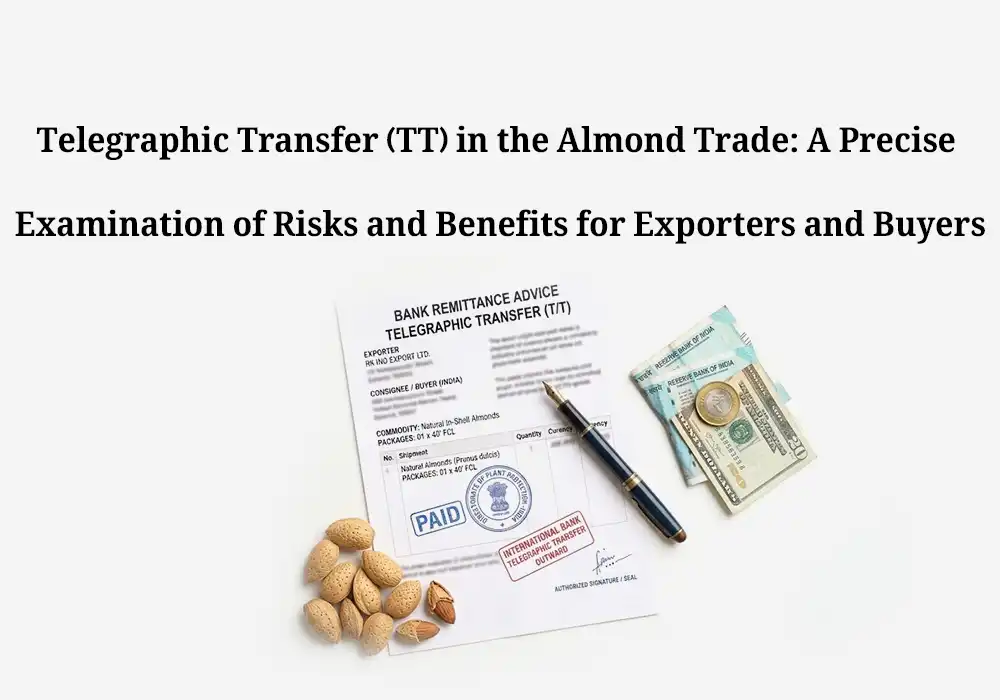
Telegraphic Transfer (TT) in the Almond Trade: A Precise Examination of Risks and Benefits for Exporters and Buyers
In the incredibly fast-paced arena of global commerce, the secure and swift transfer of funds acts as the beating heart of any transaction. Imagine this scenario: after weeks of exhausting negotiations, you have finally reached an agreement on the price and conditions of a highly valuable consignment of Mamra Almonds. The Proforma Invoice has been officially issued, and the buyer in India or the UAE is eagerly awaiting the shipment. At this highly critical juncture, the most paramount question arises: "How, and through which exact financial channel, will the funds for this massive transaction reach the seller?"
Despite the availability of numerous international payment methods such as Letters of Credit (LC) or modern digital payment gateways, one of the oldest, most prevalent, yet heavily debated methods in the dry fruit trade remains the Telegraphic Transfer (TT).
In this deeply analytical and practical article, we will place the mechanics of this payment method under a microscope specifically concerning almond exports. We will explore why, despite its well-documented risks, a vast majority of Indian and Iranian traders still prefer this method. What are its undeniable benefits and lethal risks for both buyers and sellers, and how can intelligent strategic measures be employed to minimize the hazards of these financial transactions?
1. What Exactly is a TT Transfer and How Does it Function?
Despite its archaic name harking back to the era of physical telegraphs, a TT transfer today is a highly efficient electronic interbank fund transfer, predominantly executed via the global SWIFT network.
In this protocol, the buyer (e.g., the Indian merchant) visits their bank and formally requests the transfer of a specified sum directly to the foreign currency account of the seller (or their trusted exchange house) in the destination country or a third-party hub (such as the UAE). In the bulk almond trade, a TT transaction is conventionally executed in two distinct phases:
- Advance TT (Pre-payment): A designated percentage of the total value (typically 30%) is wired before the seller begins preparing the cargo, acting as a non-refundable deposit.
- Balance TT (Final Payment): The remaining sum (e.g., 70%) is transferred after the cargo is fully prepared and a copy of the shipping documents (like the Bill of Lading, B/L) has been sent to the buyer, but before the physical handover of the goods at the destination customs. To grasp the immense importance of these customs documents during this phase, read the article What is a Certificate of Origin and Why is it Mandatory in Indian Customs?.
2. The Compelling Benefits of TT for Almond Traders
Why is the TT method so overwhelmingly popular in a trade involving such massive financial volumes as Mamra almond exports?
A) High-Speed Financial Liquidity
The absolute greatest advantage of a TT transfer is its sheer speed. Funds transferred via this method usually clear within 1 to 4 business days. In the highly dynamic and volatile almond market, where prices can fluctuate daily based on global supply, receiving funds swiftly allows the seller to immediately purchase fresh raw materials, thereby maintaining the factory's vital cash flow and operational momentum.
B) Drastically Lower Costs (Minimal Bank Charges)
When compared to the Letter of Credit (LC) method—which requires opening complex banking files, blocking massive amounts of capital, and paying exorbitant administrative fees to multiple banks—a TT transfer incurs drastically lower costs. This massive reduction in overhead expenses directly and positively impacts the final pricing of the almonds, significantly boosting the exporter's competitive edge in the global market.
C) Simplicity and Reduced Customs Bureaucracy
The TT method is fundamentally built upon "mutual commercial trust." It does not require dragging the legal departments of international banks into verifying every single shipping document. This streamlined simplicity ensures that the almond cargo can be cleared from customs immediately upon arrival, drastically reducing the severe risk of the valuable almond oil spoiling in the intense heat of the ports. To familiarize yourself with the catastrophic dangers of port delays, review the article Customs Warehouse Storage Conditions for Mamra Almonds.
3. Dissecting the Risks: Confronting the Dark Side of TT
Despite all its alluring benefits, the TT transfer remains one of the highest-risk payment methods in international trade. This risk operates like a double-edged sword, threatening both the buyer and the seller equally:
The Buyer's Risk (The Indian Merchant)
- Non-Delivery of Cargo: The buyer wires a 30% advance payment in good faith, but a fraudulent or unreliable seller fails to ship the cargo and completely severs all communication.
- Quality Discrepancy: The buyer pays the full amount, but the cargo that arrives consists of low-quality, stale, or bitter almonds. Because the bank in a TT transaction holds zero jurisdiction or oversight over the physical quality of the goods, the buyer possesses virtually no powerful legal leverage to reclaim their lost funds. To learn how to proactively prevent this nightmare, do not miss reading Comprehensive Guide to Almond Quality Control for Bulk Buyers.
The Seller's Risk (The Iranian Exporter)
- Refusal to Pay the Balance: The seller honestly ships the cargo and emails copies of the shipping documents to the buyer. However, the buyer—using various excuses such as a sudden drop in global almond prices or making baseless complaints about the cargo's quality—refuses to wire the remaining 70% balance.
- Abandoned Containers at the Port: If the buyer refuses to pay, the container is essentially held hostage at the destination port. The seller, in addition to losing their capital investment in the goods, is now forced to pay staggering daily demurrage (container detention) fees to the foreign port!
4. How to Manage and Neutralize TT Risks? (Intelligent Strategies)
To successfully harness the speed and cost-efficiency of TT transfers while simultaneously shielding your capital, adhering to these vital principles is mandatory:
- Rigorous Vetting and Commercial History: Never execute a TT transaction with an unknown buyer or seller based purely on a well-designed Proforma Invoice. Exhaustively verify their corporate history, official website, export volume, and reputation within international Chambers of Commerce.
- Drafting Powerful Legal Contracts: The agreement regarding the advance payment percentage is absolutely critical. Securing a 30% to 40% advance payment provides the absolute minimum safety margin required to cover the initial costs of packaging, domestic transport, and customs processing.
- Total Transparency via Independent Inspection (SGS): To secure the absolute trust of the Indian buyer prior to them wiring funds, utilize internationally recognized inspection agencies (such as SGS). Have them certify the health, quality, and precise grading of the almonds at the origin (Iran). This impartial certification mathematically reduces the buyer's risk of quality discrepancy to zero.
- Intelligent Control of Shipping Documents (B/L): The seller must never dispatch the "Original Bill of Lading" to the buyer before full financial settlement has been confirmed. Without the original B/L, it is legally impossible for the buyer to clear the cargo from customs; retaining this document is the seller's ultimate leverage for securing the remaining 70% balance.
5. Absolute Financial and Commercial Security with Walmondhe
In international trade, profound trust is not manufactured overnight; rather, it is the cumulative result of years of unwavering commitment, total transparency, and the flawless delivery of premium products.
The Walmondhe engineering and trading group, standing as the most authoritative reference for Saman almonds, has eradicated all anxieties surrounding foreign currency transfers for its international buyers by establishing highly secure and transparent legal frameworks.
- Written Quality Guarantee Against Payment: We provide our buyers with an ironclad guarantee that the cargo they receive post-payment will flawlessly match the exact specifications detailed in the Proforma (including 100% genetic sweetness, uniform sizing, and standard moisture levels).
- A Powerful Legal Structure: By providing impeccable customs documentation, official Phytosanitary certificates, and accommodating rigorous independent inspections, we orchestrate a completely secure, lightning-fast transaction with zero risk of discrepancy. To understand the meticulous process of acquiring these safety documents, review the article A Comprehensive Guide to Obtaining a Phytosanitary Certificate for Almond Cargoes.
To receive specialized consultation on banking affairs, currency transfer methodologies, and to obtain the daily pricing of highly esteemed export varieties including Mamra Almonds and Iranian Moheb Almonds, communicate with our sales department experts through the official paths below:
- Direct & Fast WhatsApp Communication: +989136667618
- Direct Sales Department Telephone: +989136667618