
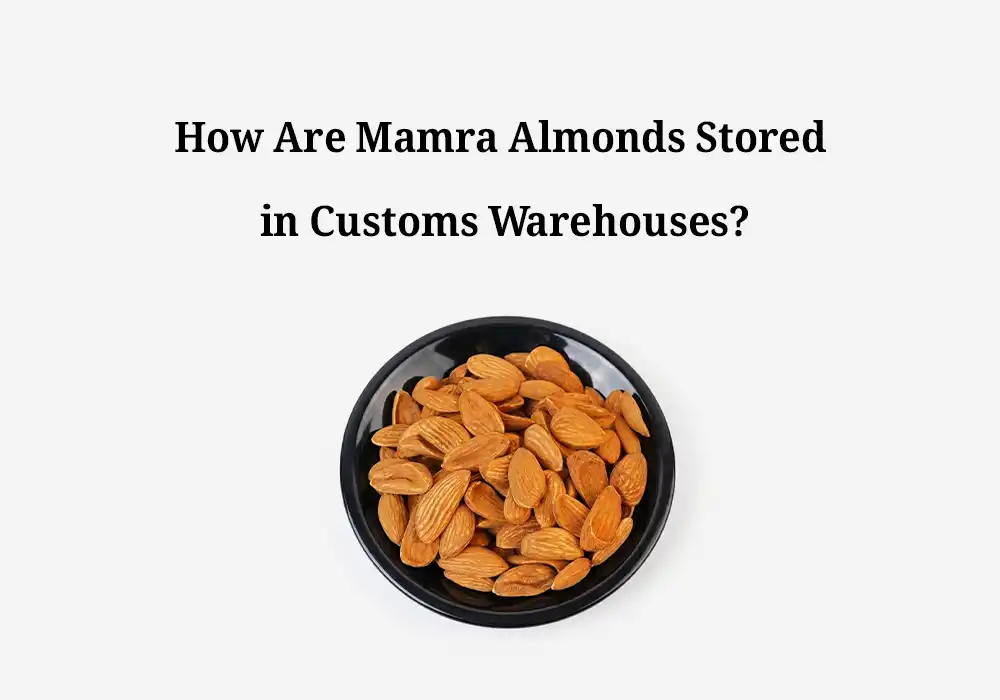
How Are Mamra Almonds Stored in Customs Warehouses? (In Very Simple Terms!)
Let's walk through a little story together: You have worked hard, invested your money, and bought the finest Mamra Almonds. Your cargo was loaded onto a truck and safely reached the port customs or the buyer's country's customs (like India or Dubai).
Many people think: "Phew! The cargo reached customs, the job is done!" But that is not true at all. Customs is like a giant checkpoint. It can take days or even weeks for them to check your documents, stamp the papers, and finish all the "red tape." During this entire waiting time, your expensive almonds have to sit in a giant hall called a "Customs Warehouse."
So, what is the problem? Almonds are a living, highly sensitive product. If this waiting room (the warehouse) is not a good place, the almonds will lose their aroma and taste in just a few days. In this article, we want to look—in a very simple and friendly way—at what makes a good customs warehouse to keep your multi-million dollar investment completely safe.
1. Heat and Moisture: The Two Silent Killers!
Mamra almonds are packed with healthy, natural oils. This oil acts exactly like butter. What happens if you leave butter out in the hot sun? It melts and smells bad!
- The warehouse must be cool: The best place for almonds is somewhere with cool air (like spring weather). If your cargo arrives at a hot port in the middle of summer and the warehouse doesn't have proper AC or fans, the oil inside the almonds goes bad, and the batch gets a stale, old smell.
- The danger of wet air (Humidity): The air in the warehouse should absolutely not be damp and humid. Humid air makes the almonds lose their crunch and feel like rubber when you chew them. Worst of all, moisture causes a toxic mold to grow on the almonds called "Aflatoxin." If the health inspectors find this mold, they will literally burn your entire cargo! To learn how to prevent this disaster, definitely read our Simple Guide to Almond Quality Control and Aflatoxin Testing.
2. Almonds Need to Breathe! (Air Ventilation)
Customs warehouses are like massive indoor cities that hold absolutely everything; from car tires and strong spices to cleaning chemicals!
- The danger of catching smells: An almond kernel acts just like a sponge—it quickly sucks up any smell around it. Now, imagine they put your almonds right next to a huge pile of Indian garlic powder or spices, and the air isn't moving at all! The result? Your sweet almonds will taste like garlic!
- What is the solution? A good customs warehouse must have very strong exhaust fans (large ventilators) to keep fresh air constantly moving between the almond cartons and push the bad smells outside.
3. Why Don't They Put the Cargo on the Floor? (Using Pallets)
There is a very important, golden rule in international customs: Never, under any circumstances, place food directly on the ground.
- What is the story here? Almond cartons must always be stacked on wooden or plastic platforms (called pallets) so they are at least a hand's span above the ground. Why?
- Because the freezing cold of the concrete floor won't reach the almonds.
- If it suddenly rains hard and the floor floods, or if the workers wash the floor, the water won't touch your cartons.
- Forklifts (those little trucks with two metal horns) can easily pick up and move the cargo without tearing the boxes apart.
4. Mice and Bugs: The Uninvited Guests!
Giant sheds are always popular hiding spots for mice and insects. And guess what? These creatures also love to eat almond kernels!
- What should be done? Customs is required to regularly spray their warehouses for bugs. But you have to be smart, too. Before your cargo even enters the warehouse, it should take a "smoke bath" back in your country! This means it gets fully disinfected with safe gases so no bugs are left inside. This is called getting a "Health Certificate," which is an absolute must for exports.
5. A Spacesuit for Your Almonds! (Your Magical Packaging)
Let's be realistic; we can't always stand over the customs warehouse manager's head to make sure they are taking good care of our cargo! Sometimes warehouses are too crowded, or their facilities are poor. This is exactly where "Professional Packaging" comes to your rescue.
- The protective shield: Smart merchants put the almonds into thick plastic bags, use a machine to suck all the air out (vacuum seal), and then pump a safe gas called "Nitrogen" inside to puff it up. This is like putting a spacesuit on your almonds! By doing this, no heat, no moisture, no bad smells, and no bugs can penetrate the almonds.
- Great Suggestion: If you want to know how these packages travel on ships without getting ruined, you should definitely take a look at our article on Container Types and Temperature Control for Almonds Over Long Distances.
6. The Customs Parking Ticket! (Storage Fees)
Staying too long in customs doesn't just ruin your almonds; it empties your pockets, too!
Customs usually gives you the first few days as a free bonus. But if your paperwork takes too long and the cargo cannot leave the customs yard, they will charge you a heavy daily rent for every extra day it sits there (just like an expensive parking ticket!).
- If you want to know how these fees are calculated in places like Dubai, I highly recommend reading How Warehousing Costs in Dubai (Jebel Ali) Affect Your Profit?
Final Word: The Best Warehouse is the One You Leave Quickly!
No matter how clean and cool a customs warehouse is, it is not a place for almonds to stay. The secret of a smart merchant is to have all the documents and permits ready before the cargo even arrives. That way, as soon as it gets there, they can clear the cargo in those first few free days without paying a single dime in fines.
Walmondhe Export Group knows the A to Z of customs procedures perfectly. We pack your Mamra almonds in the best protective gear (Vacuum and Nitrogen) so that even if your cargo has to stay in customs for days, it won't lose even one percent of its quality and freshness.
To buy first-class export almonds directly and get free advice on customs procedures, simply get in touch with us right now:
- Quick, direct message on WhatsApp: 09136667618
- Phone call with our caring experts: 09136667618