
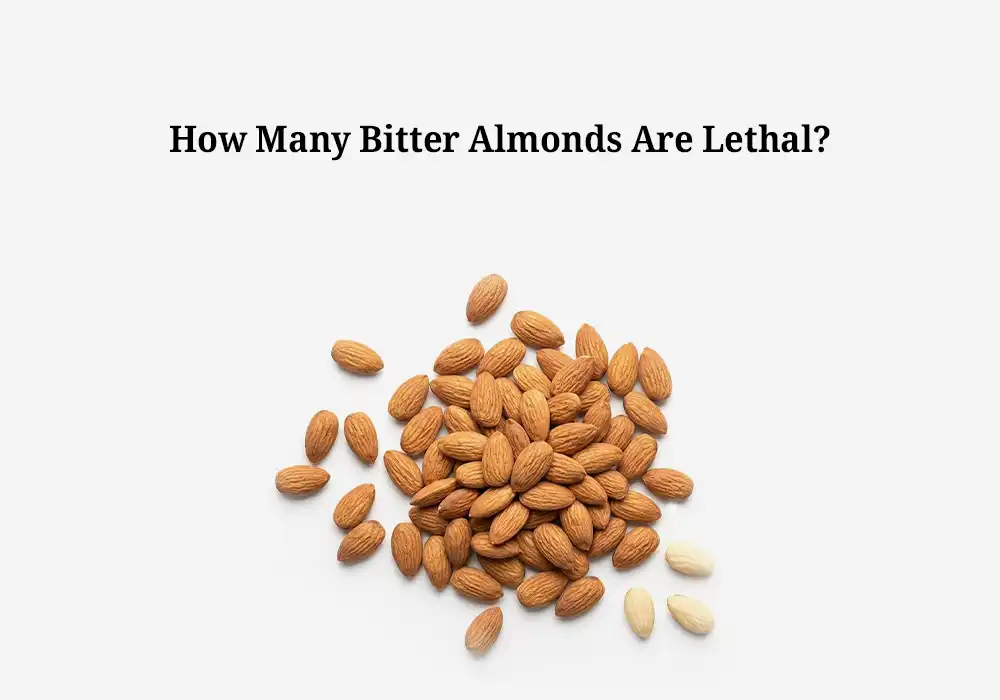
How Many Bitter Almonds Are Lethal? (A Scientific Review of Amygdalin and Cyanide Production in the Body)
In detective novels and mystery stories, there is frequent mention of a deadly poison that smells distinctly like "bitter almonds." This literary trope is rooted in a highly precise biological and scientific reality. The bitter almond, despite its deceptive appearance that perfectly mimics safe, sweet almonds, harbors a miniature toxin-producing factory inside its core.
Many people have experienced the sharp, biting, and unpleasant taste of a bitter almond while eating low-quality mixed nuts. Usually, accidentally chewing and swallowing one or two of these seeds causes nothing more than a foul taste in the mouth. However, the critical and alarming question remains: Where is the boundary between a bad-tasting experience and a fatal poisoning? If a young child unknowingly swallows several bitter almonds, how does their body react, and exactly how many of these seeds can put a human life at absolute risk?
In this comprehensive and analytical article, we intend to penetrate the chemical structure of the bitter almond. We will examine the process by which botanical compounds convert into deadly cyanide within the stomach, and provide precise scientific statistics on the risks for different age groups. This exploration underscores the vital importance of selecting authentic, 100% sweet varieties like Mamra Almonds.
1. The Biochemistry of the Bitter Almond: How is Cyanide Produced?
To survive in the wild and prevent its seeds from being entirely consumed by foraging animals and birds, the wild almond tree evolved a highly complex defense mechanism. The kernel of the bitter almond does not contain free-floating poison; rather, it houses two separate components: a plant compound named "Amygdalin" and a specific enzyme called "Emulsin."
As long as the almond remains intact, these two substances do not mix. However, the moment you crush the almond between your teeth and swallow it, the moisture in your mouth and the hydrochloric acid in your stomach cause these two elements to interact. The result of this chemical reaction is the rapid decomposition of amygdalin, releasing a highly toxic gas known as "Hydrogen Cyanide" (or prussic acid). Upon entering the bloodstream, cyanide aggressively binds to hemoglobin, entirely blocking the transfer of oxygen to the brain and heart cells. In this state, despite taking deep breaths, the individual's cells experience internal suffocation. To gain a deeper understanding of the structural differences between this seed and sweet varieties, studying the article Bitter vs. Sweet Almond? Differences, Cyanide Poisoning Risks, and Industrial Uses is essential.
2. The Danger Threshold: How Many Bitter Almonds Are Lethal?
The toxicity level of bitter almonds depends directly on the individual's weight, age, liver health, and the specific concentration of amygdalin within the consumed seeds. According to toxicological research, a single raw bitter almond can yield between 4 to 9 milligrams of hydrogen cyanide. The generally accepted lethal dose of cyanide for a human is approximately 0.5 to 3.5 milligrams per kilogram of body weight.
Based on simple scientific calculations, the danger threshold for various age groups is outlined below:
A) Critical Danger for Infants and Children
Children are exceptionally vulnerable to cyanide poisoning due to their low body mass and highly sensitive metabolic systems.
- Dangerous Dose: Eating just 2 to 3 raw bitter almonds can trigger severe poisoning symptoms (such as palpitations, shortness of breath, and dizziness) in a young child.
- Lethal Dose: Swallowing 5 to 10 bitter almonds can cause respiratory arrest and death in a child weighing around 10 to 15 kilograms. This alarming fact proves the absolute necessity of purging children's snacks of any questionable seeds. In this regard, to understand the importance of safe nutrition during critical life stages, the article Mamra Almond Benefits During Pregnancy offers valuable insights.
B) The Danger Threshold for Adults
The adult body demonstrates higher resilience due to a larger blood volume and the liver's capacity to filter out minor quantities of toxins.
- Dangerous Dose: Consuming 10 to 20 bitter almonds causes nausea, a throbbing headache, a drop in blood pressure, and profound neurological weakness in adults.
- Lethal Dose: Swallowing 50 to 70 raw bitter almonds is considered the lethal dose for an average-weight adult, inevitably leading to death if immediate medical intervention is not provided.
3. Does Roasting the Almonds Destroy the Poison?
A widespread myth suggests that roasting or boiling bitter almonds destroys the toxin, making them safe to eat. This belief has a partial basis in chemistry, but it is not entirely safe.
Subjecting the almond to high heat (roasting) degrades the "Emulsin" enzyme, which is the catalyst that converts amygdalin to cyanide. Furthermore, a portion of the hydrogen cyanide evaporates due to its gaseous nature. Nonetheless, a significant amount of the toxic compounds remains locked within the almond's cellular matrix. Consequently, eating a large quantity of roasted bitter almonds still carries a substantial risk of poisoning. For this exact reason, food scientists and health organizations globally prohibit the oral consumption of bitter almonds under any circumstances (raw or roasted), restricting their use exclusively to oil extraction for topical applications.
Scientific Guide Table: Risk Dosages for Bitter Almond Consumption
| Consumer Age Group | Approximate Weight | Onset of Symptoms (Dizziness & Nausea) | Critical Dose (Probability of Death) |
|---|---|---|---|
| Toddlers (1 to 5 years) | 10 to 18 kg | 2 to 3 seeds | 5 to 10 seeds |
| Children & Teens | 20 to 40 kg | 5 to 8 seeds | 15 to 25 seeds |
| Adults | 60 to 80 kg | 15 to 20 seeds | 50 to 70 seeds |
4. Peace of Mind with 100% Sweet Saman Almonds
Given the proven hazards of bitter almonds, the most rational approach to ensuring family health and safeguarding international trade reputation is to select varieties that genetically lack the amygdalin-producing gene.
The Mamra almond tree in the Zayandeh Rud basin is a masterpiece of natural agricultural selection. The genetics of this variety have evolved to the point where the production of bitter seeds is brought to an absolute zero. In a multi-ton cargo of Saman Mamra almonds, you will not locate even a single bitter seed. These kernels are biologically programmed exclusively to store healthy plant sugars and unsaturated fats. To explore the details of this biological superiority, review the article Difference Between Saman Mamra Almond and Other Iranian Varieties.
5. Food Security in the Walmondhe Supply Chain
The Walmondhe engineering and trading group, functioning as a specialized authority in almond processing in the Saman region, has completely eliminated the concern of bitter and inferior seeds for wholesale buyers and exporters.
By sourcing products directly from accredited orchards and utilizing advanced optical sorting technologies, we deliver cargoes to the market that are one hundred percent sweet, fresh, and exceptionally nutritious. To familiarize yourself with the quality framework of our organization, reading the article Why Walmondhe is the Best Choice for Wholesale Almonds & Exports is highly recommended.
To receive consultation for wholesale purchases, export operations, and to obtain the daily pricing of the purest and safest varieties, including Mamra Almonds and Iranian Moheb Almonds, communicate with our sales department experts through the official channels below:
- Direct WhatsApp Communication: 09136667618
- Sales Department Telephone: 09136667618