
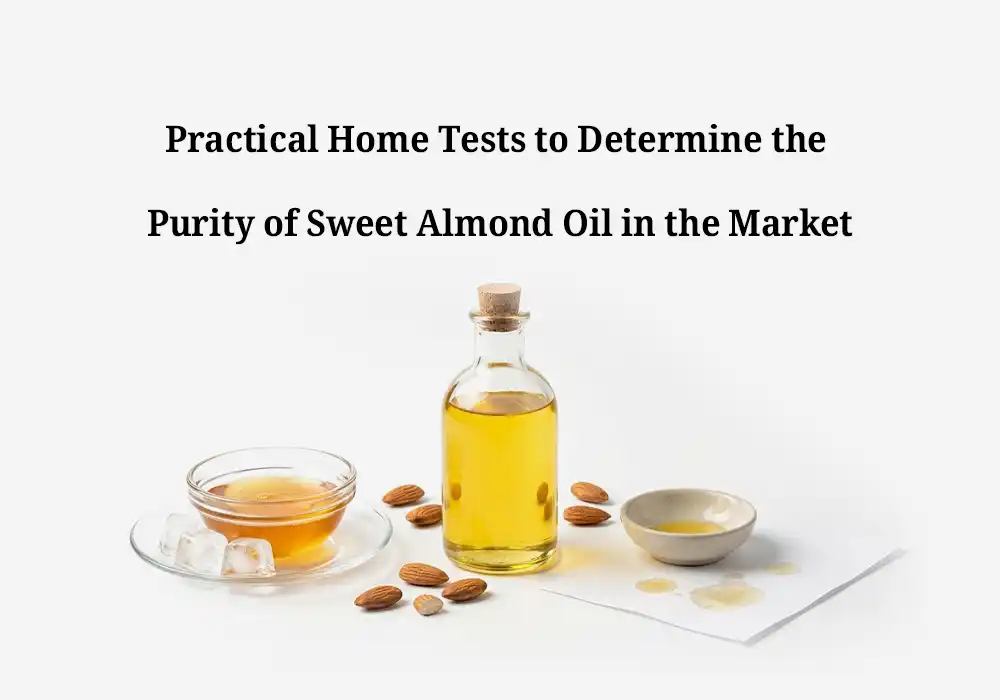
Practical Home Tests to Determine the Purity of Sweet Almond Oil in the Market (A Comprehensive Analysis)
For thousands of years, sweet almond oil has been recognized as one of nature's most valuable gifts for preserving skin youthfulness, strengthening hair follicles, and improving digestive functions. This golden extract is extraordinarily rich in Vitamin E, unsaturated fatty acids, and potent antioxidants. However, the ever-increasing global demand for this precious commodity has paved the way for impure and counterfeit products to flood the market.
Many unreliable manufacturers, seeking to reduce production costs and maximize profit margins, blend cheap industrial oils (such as liquid paraffin, mineral oil, or standard cooking oils) with a minuscule fraction of real almond oil, marketing the concoction as "100% Pure Sweet Almond Oil." Applying these adulterated mixtures yields absolutely no therapeutic benefits; conversely, it causes the blockage of respiratory skin pores, induces subcutaneous acne, and severely weakens hair follicles.
In this article, we intend to approach the subject with a deeply analytical and scientific perspective, unveiling the hidden realities of production workshops and examining practical, home-based testing methods. Utilizing these techniques, you will be equipped to evaluate the purity and authenticity of sweet almond oil without requiring complex laboratory equipment, thereby safeguarding your financial investment and physical health.
1. The Fundamental Difference Between Sweet and Bitter Almond Oil: The First Step in Recognition
Before conducting any examinations, understanding the difference in the source of extraction is mandatory. The almond tree exists in nature under two distinct lineages, each possessing a unique chemical structure. The oil extracted from bitter almonds contains substantial quantities of a compound called "Amygdalin," which produces an intensely sharp, penetrating aroma.
On the opposite spectrum, sweet almond oil (extracted from premium varieties like Mamra Almonds) entirely lacks this defensive botanical compound. Therefore, the first rule in identifying sweet almond oil is that it must not carry the sharp, pungent scent characteristic of bitter almonds. To study the structural and biological differences between these two lineages in greater depth, review the specialized article: Bitter vs. Sweet Almond? Differences, Cyanide Poisoning Risks, and Industrial Uses.
2. The Aroma Analysis: Decoding the Olfactory Signature
A widespread misconception among buyers is that pure sweet almond oil must possess an overpowering, intoxicating scent of almonds. This is a fundamentally flawed assumption that fraudsters frequently exploit.
- Characteristics of Authentic Aroma: Pure sweet almond oil emits an extremely mild, subtle, and nearly neutral scent, evoking only a faint halo of fresh wood and nutty undertones. This aroma is never aggressive or offensive.
- Aroma of Counterfeit Products: Manufacturers of counterfeit products utilize synthetic chemical essences featuring a strong almond odor to deceive the buyer's olfactory system. Upon opening the bottle, if you are met with a scent resembling factory-made pastries, artificial perfumes, or strong essences, you are definitively holding an impure product. In large-scale commercial transactions, recognizing these frauds is vital; to understand detection methods in wholesale volumes, review the article: How to Detect Fraud in Mixed Almond Cargoes for Bulk Export.
3. The Refrigeration Test: Analyzing Fatty Acid Behavior
One of the most precise home-based methods for gauging the purity of botanical oils involves observing their reaction to temperature reduction. Pure sweet almond oil contains high levels of oleic acid (Omega-9).
- Executing the Test: Pour two tablespoons of the oil in question into a clear glass container and place it in the refrigerator (not the freezer) for several hours.
- Analyzing the Results: Natural sweet almond oil does not freeze completely into a solid block at refrigerator temperatures. Instead, its structure begins to cloud, and particles resembling a fine mist or tiny, cloudy crystals materialize within the liquid. Once removed from the refrigerator and returned to room temperature, the oil will become completely transparent again. If the oil solidifies entirely (indicating a blend with animal fats or palm oil), or if it remains completely thin and clear without any change (indicating the use of mineral oils and paraffin), its authenticity is highly questionable. To learn about the standard fat content in this seed, browse through Standard Kernel Yield & Oil Content of Mamra Almonds.
4. Skin Permeability and Behavioral Test
The texture of human skin serves as a natural laboratory for examining the molecular structure of oils. Pure sweet almond oil demonstrates a distinct behavior due to its complete compatibility with the natural lipids secreted by human sebaceous glands.
- Reaction of Pure Oil: Place a few drops of the product on the back of your hand and massage it using circular motions. Authentic oil is rapidly absorbed into the deep layers of the skin within minutes. Following absorption, the skin texture becomes soft and hydrated, leaving absolutely no shiny, sticky, or heavy residue behind.
- Reaction of Impure Oil: Oils cut with petroleum derivatives (such as liquid paraffin) possess large, coarse molecules that lack the ability to penetrate skin pores. These compounds remain trapped on the skin's surface, creating a heavy, greasy, and suffocating layer that refuses to absorb, regardless of how much time passes.
5. The Evaporation and Paper Residue Test
This method evaluates the volatility of the oil and the presence of heavy impurities, serving as a highly effective tool for assessing product quality.
- Conducting the Test: Drop a single drop of the oil onto a clean, white piece of paper and allow it to rest at room temperature for 24 hours.
- Interpreting the Results: Over time, natural sweet almond oil will spread across the paper's fibers, and its halo will become faint and nearly invisible, as portions of its compounds are absorbed without leaving intense stickiness. Conversely, counterfeit oils blended with cheap cooking oils leave a profoundly dark, thick, and enduring stain. When touched, the heavy grease of the adulterants is unmistakably felt. To familiarize yourself with quality control principles for large shipments, study the article: Comprehensive Guide to Almond Quality Control for Bulk Buyers.
6. Evaluating Color and Visual Clarity
The cold-press extraction method guarantees the preservation of the vitamin structure within the oil. This production technique directly impacts the visual appearance of the final product.
Authentic sweet almond oil possesses a pale yellow, transparent, and light golden hue. If the oil you purchased is entirely colorless, it has likely been refined and bleached using chemical methodologies. On the other hand, dark yellow, cloudy, or brownish hues indicate the use of stale seeds, roasting the almonds prior to oil extraction, or a failure to observe hygienic principles during the extraction process.
7. Pricing Strategy: The Economic Logic of Production
Analyzing the economics of production is one of the most decisive methods for identifying an authentic product. Extracting one liter of pure sweet almond oil requires the consumption of several kilograms of premium almond kernels. The processes of planting, maintaining, harvesting, hulling, and operating cold-press machinery impose specific and substantial costs on the producer.
The presence of large oil bottles in the market bearing a "Pure" label, priced identically to ordinary cooking oils, is fundamentally impossible from the standpoint of economic logic. Superior quality invariably demands its true price, and the usage of cheap, chemical alternatives will ultimately threaten the consumer's health.
8. Guaranteeing Quality and Authenticity in the Walmondhe Supply Chain
Securing pure products in a market characterized by a heavy presence of middlemen is a formidable challenge. Procuring products directly from suppliers stationed at the agricultural source remains the safest route to guarantee authenticity.
The Walmondhe engineering and trading group, maintaining a continuous presence in the Saman region orchards, has built its supply chain upon delivering the purest almond derivatives. By strictly supervising the seed selection process, we supply products that have been processed without any chemical intervention or destructive heat, ensuring that the intrinsic properties, vitamins, and lipid structures of the seeds are flawlessly preserved. To gain a deeper understanding of this transparent structure, review the article: Is Walmondhe a Direct Supplier from Saman Farmers?.
To receive specialized consultation, inquire about wholesale ordering procedures, and obtain the daily pricing of elite varieties including Mamra Almonds and Iranian Moheb Almonds, communicate with our sales department experts through the official channels below:
- Direct WhatsApp Communication: 09136667618
- Sales Department Telephone: 09136667618