
How to Prevent Worms in Pistachios at Home (The Ultimate Strategy to Protect Your Green Treasure)
Imagine preparing for a luxurious evening gathering or a festive holiday celebration. You confidently reach into your kitchen cabinet and extract your expensive, premium crystal bowl filled with pistachios. With joyous anticipation, you crack open the very first nut, only to be confronted by a scene of absolute horror: ultra-fine silk webs, strange brown dust, and ultimately, a tiny, writhing white worm actively devouring the kernel of your pistachio! This appalling sight not only instantaneously annihilates your appetite but can cause profound, lasting embarrassment for a host in front of esteemed guests.
The pistachio, being a highly nutritious, fat-dense, and protein-rich botanical seed, is not merely a delicacy for human beings; it is considered an absolute royal feast for a variety of household insects and pantry pests. The vast majority of consumers, upon discovering insects in their nut bowls, immediately assume the vendor maliciously sold them rotten goods. However, in ninety percent of these disastrous cases, it is the incorrect and biologically ignorant storage conditions within the consumer's own home that trigger the catastrophe.
How do these invasive pests manage to penetrate the hard bony shells of pistachios? Is there a definitive, scientific method to halt this biological invasion? In this deeply analytical and highly comprehensive guide, we will journey into the dark micro-world of pantry pests. By meticulously dissecting the life cycle of these insects, we will teach you exactly how to execute brilliant, scientific, and natural household tactics to construct an impenetrable fortress around your pistachios, guaranteeing their pristine crunch for months to come.
1. Tracing the Root of the Catastrophe: Where Do the Worms Come From?
To successfully eradicate an enemy, you must first understand its biology. The worms wriggling inside your pistachio bowl do not magically materialize out of thin air! These worms are actually the voracious larval stage of the Indianmeal moth (the common pantry moth).
The grim narrative usually begins in the vast agricultural orchards or large-scale, traditional dry fruit warehouses. Adult female moths land on the drying pistachios and deposit microscopic, virtually invisible eggs onto the shells or deep within the natural splits of the nuts. You purchase these pistachios and bring them into your home while they appear flawlessly clean and perfectly healthy to the naked eye. These invisible eggs require only two environmental triggers to awaken and hatch: Warmth and Darkness. When you lazily toss the pistachios—still inside their thin plastic retail bags—into a dark, room-temperature kitchen cabinet, you have inadvertently engineered the perfect biological incubator. At temperatures above twenty degrees Celsius, these microscopic eggs hatch in less than two weeks, and the newborn worms immediately begin devouring the rich lipids.
2. The Cold Shock: The First and Most Lethal Line of Defense
If you intend to completely sever the life cycle of these pests before they even have a chance to begin, you must execute a preemptive strike the exact moment the pistachios cross your threshold.
Just as we deeply explored the importance of temperature control in our comprehensive tutorial on storing fresh pistachios in the freezer, extreme cold is your ultimate savior here as well. Immediately upon returning from the market, transfer the pistachios into a heavy-duty freezer bag. Squeeze out as much ambient air as physically possible and seal it tightly. Place this bag in the coldest shelf of your freezer for a strict minimum of forty-eight hours. The sub-zero temperatures serve as a brutal, lethal shock that completely annihilates any potential microscopic insect eggs hidden within the shells. After two days, extract the bag and allow the pistachios to gently return to room temperature. You now possess a batch of pistachios that are biologically sterile.
3. Selecting the Ultimate Fortress: Glass vs. Plastic
The physical vessel you select for long-term storage represents the critical boundary between pristine freshness and inevitable decay. A vast majority of consumers simply toss their nuts into the pantry in their original, flimsy plastic retail bags—a fatal logistical error.
- The Plastic Trap: Thin plastic bags offer absolutely zero resistance against invading insects. Adult pantry pests possess highly evolved, powerful mandibles that can effortlessly chew through standard plastic to reach the nutrient-dense nuts inside. Furthermore, plastic traps ambient moisture, directly catalyzing the growth of toxic fungal molds.
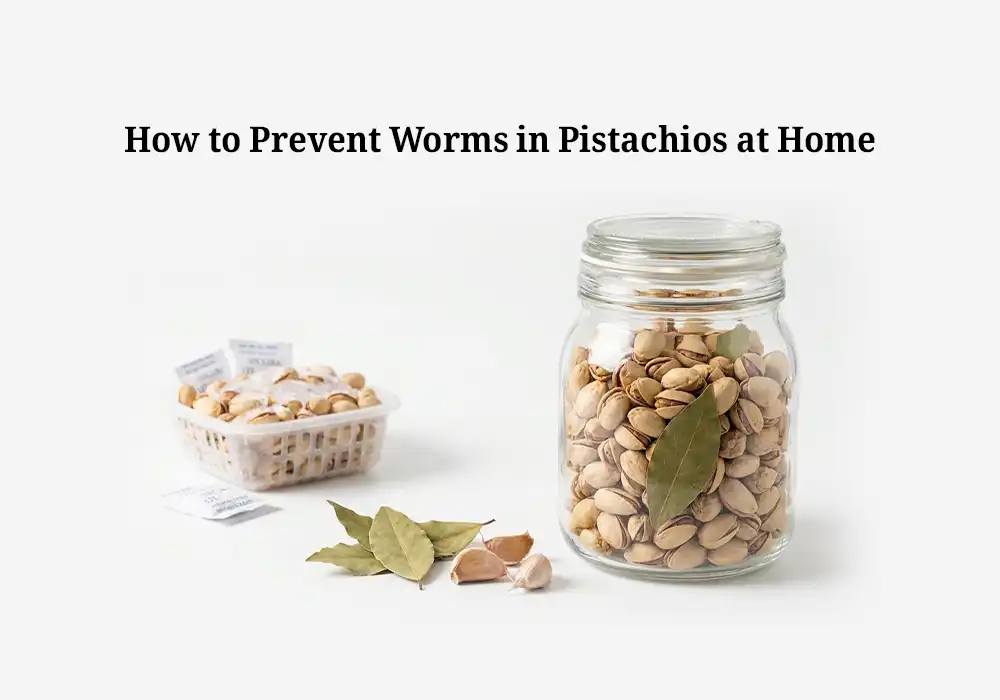
- The Glass Citadel: The absolute superior, safest, and most hygienic container for storing pistachios is a thoroughly washed, bone-dry glass jar equipped with a heavy-duty silicone gasket (an airtight seal). Glass imparts zero chemical odors into the delicate fats of the nut, and insects are biologically incapable of penetrating it. Furthermore, if the lid is hermetically sealed, the oxygen supply is choked off, preventing any survival.
4. Natural and Botanical Repellents: The Aromatic Guardians of the Nut Bowl
If you intend to store your pistachios in a room-temperature kitchen cabinet for an extended duration, you can brilliantly employ the ancient wisdom of traditional botany to repel invading pests. Pantry insects harbor a profound biological hatred for specific pungent aromas.
- Bay Leaves: Submerge two or three completely dry bay leaves directly into the glass jar alongside the pistachios. The sharp aroma of the bay leaf acts as a remarkably powerful insect repellent. Brilliantly, this scent does not transfer into the lipids of the pistachio, leaving the flavor entirely uncorrupted.
- Whole Cloves: Dried whole cloves are another relentless enemy of pantry moths and ants. Dropping four to five whole cloves into the storage container acts as an invisible, aromatic forcefield, driving pests away immediately.
- Rock Salt Crystals: Placing a few large chunks of natural rock salt at the bottom of your storage jar actively absorbs excess ambient moisture, rendering the space highly inhospitable for developing larvae.
5. The Final Secret: Guaranteeing Purity with Flawless Sourcing
All of these meticulous household strategies perform at their absolute peak only when you initiate the process by purchasing a pistachio that is inherently premium and freshly harvested. Stale, traditionally processed pistachios left in open bazaars are already heavily infested from day one. To ensure you never fall into this commercial trap, we highly recommend reading our detailed guide on identifying fresh and high-quality pistachios to train your eye like a true expert.
Among all global varieties, the Ahmad Aghaei Pistachio, celebrated not only for its elegant elongated profile and intensely buttery flavor but also for the structural integrity of its brilliantly white bony shell, stands as one of the most resilient varieties for safe, long-term storage.
The Walmondhe engineering and trading group proudly supplies the most elite, pristine Ahmad Aghaei pistachios from Iran. Our luxury products are processed utilizing the world's most advanced laser sorting sensors and strict vacuum-sealing environments. We guarantee that every single pistachio you procure from us is biologically sterile, entirely devoid of insect eggs, and free from Aflatoxin.
To secure bulk commercial orders for elite retail markets and inquire about real-time export pricing, connect with our commercial sales department through the official channels below:
- Direct & Fast WhatsApp Communication: +989136667618
- Direct Sales Department Telephone: +989136667618