
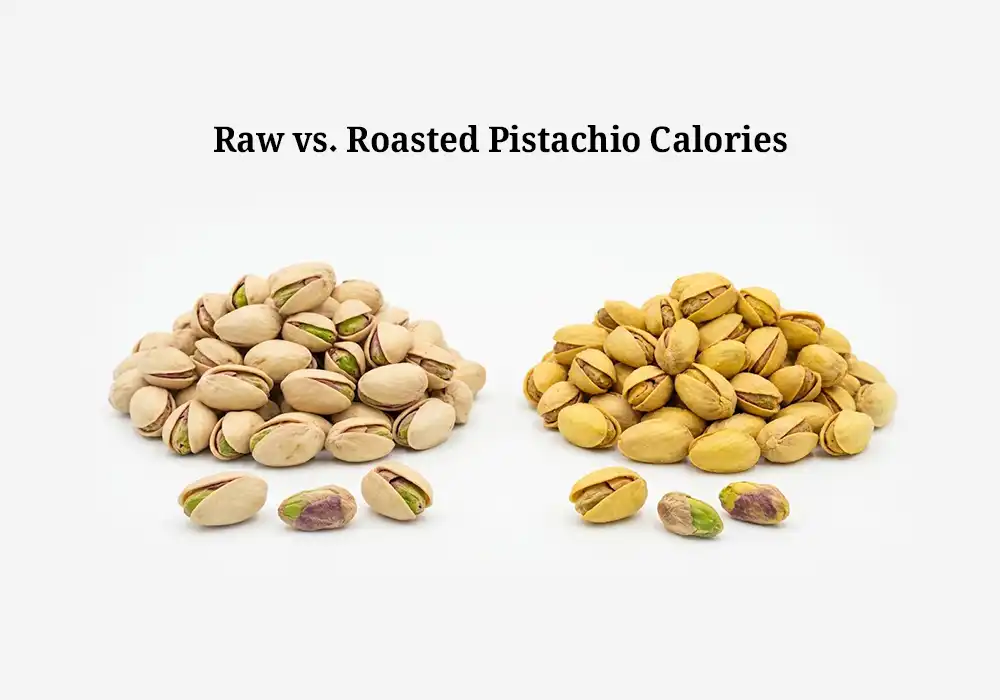
Raw vs. Roasted Pistachio Calories (Dissecting a Mathematical Illusion in the Diet Industry)
In the loud and obsessive world of fitness diets, weight management, and meticulous macronutrient counting, the word "calorie" has violently crowned itself as the undisputed king of our daily decisions. When an athlete or a highly disciplined individual on a weight-loss journey gazes upon a bowl of premium nuts, their brain instinctively transforms into an automated calculator. The pistachio, universally celebrated as one of the most delicious and aristocratic botanical seeds on the planet, consistently finds itself at the epicenter of these terrifying dietary calculations.
One of the most enduring, complex, and deceptive questions that plagues the minds of dietitians and health-conscious consumers alike is this: "Does the industrial roasting process organically increase the calorie count of a pistachio? Will snacking on a handful of roasted nuts trigger more visceral fat accumulation in my abdomen than eating a handful of raw ones?"
If you blindly trust the nutritional facts printed on commercial packaging, you will encounter a bizarre numerical discrepancy. These official tables invariably declare that one hundred grams of dry-roasted pistachios possess a significantly higher caloric density than one hundred grams of raw pistachios! This cold, mathematical figure instantly forces countless dieters to flee from roasted nuts in absolute terror. But do these printed numbers reflect the genuine biological reality of the human digestive system, or are they merely a deceptive illusion engineered by the laws of physics?
In this profoundly comprehensive, analytical, and highly specialized article, we will penetrate the cellular core of the pistachio through the lens of metabolic biochemistry and food thermodynamics. We will shatter the myth of the hidden numbers on nutrition labels and prove to you exactly why the human stomach does not operate like a simple digital calculator.
1. The Illusion of Density: Why Does Roasted Look Heavier on Paper?
To decode this massive global mystery, we must first enter the physics laboratory. When you place one hundred grams of freshly harvested raw pistachios on a digital scale, you are not merely weighing fats, proteins, and fibers. You are also weighing "hidden water." A raw, sun-dried pistachio still retains approximately four to five percent internal moisture within its cellular matrix—and this water contains absolutely zero calories.
Now, imagine we shovel this exact same one hundred grams of raw pistachios into a blistering industrial roasting oven set to 160 degrees Celsius. Subjected to this aggressive thermal environment, all the hidden botanical water instantly evaporates into steam. When the nut loses its internal moisture, its physical weight mathematically drops. Therefore, to reach that exact "one hundred grams" mark on the scale once again, the technician must add several more individual roasted pistachios to the pile! Here lies the profound secret: When you consume one hundred grams of roasted pistachios, you are physically eating a higher quantity of individual kernels than you would in one hundred grams of raw nuts. The caloric spike on the nutrition label is not caused by the magical creation of new fats in the oven; it is entirely an illusion caused by water evaporation and the resulting higher density of nuts in a fixed unit of weight. If you count calories kernel by kernel (e.g., twenty raw nuts versus twenty dry-roasted, oil-free nuts), their absolute caloric load is biologically identical.
2. The Biochemistry of Digestion: Cellular Rupture (The True Cause of Weight Gain)
We have now established that the physical caloric footprint of a single raw nut and a single dry-roasted nut is identical. However, does your stomach and small intestine treat these two seeds identically? The response from modern metabolic science is a shocking, resounding "No!"
Here we must introduce the critical biological concept of "Bioavailable Calories," which fundamentally separates the two products. A raw pistachio possesses a highly dense, rigid, and completely intact cellular structure. The premium plant-based lipids (fats) are firmly locked behind microscopic fortress walls made of tough dietary fiber. When you chew a raw pistachio, regardless of how meticulously you grind it, your digestive enzymes cannot fully breach all these fibrous cellular walls. Consequently, a significant percentage of the fat locked inside the raw pistachio passes straight through your digestive tract and is excreted without ever being absorbed into your bloodstream! You simply do not absorb all the calories printed on the label. This is precisely why, when consumed responsibly, raw nuts never trigger obesity—a phenomenon we dissected deeply in our analysis of whether pistachios cause weight loss or fat burning.
Conversely, when a pistachio is violently tossed into a roasting oven, the blistering heat literally melts and shatters the fibrous cellular walls. The internal architecture of the kernel becomes highly porous and brittle, allowing the trapped lipids to bleed to the surface. When you consume a roasted pistachio, your stomach faces zero biological resistance. Nearly one hundred percent of the fat and calories are rapidly and efficiently absorbed directly into your bloodstream. Therefore, from a strictly metabolic and biological standpoint, consuming a roasted pistachio delivers a significantly higher volume of "net usable calories" into your body's fat-storage cycle.
3. The Additive Trap: When Hidden Calories Invade the Oven
Up to this point, our scientific comparison has focused exclusively on "dry-roasted" pistachios with absolutely zero additives. However, a grim reality overshadows the commercial dry fruit industry: Almost no large-scale factory roasts its pistachios without heavy manipulation!
To ensure that industrial salt, citric acid, and saffron flavorings physically stick to the smooth bony shell and give the kernel a glossy, appetizing shine, commercial roasters aggressively coat their batches in liquid starches, cheap vegetable oils, and edible chemical glues. When the pistachio is drowned in this thick chemical bath and subsequently baked, it develops a heavy, invisible crust of refined carbohydrates and saturated trans-fats. These aggressive commercial additives exponentially multiply the caloric density of the nut and trigger violent spikes in blood sugar. Binge-eating these chemically engineered nuts rapidly induces insulin resistance and visceral liver fat. To fully comprehend this dietary catastrophe and the severe physiological damage caused by industrial roasting, studying the fierce biochemical battle outlined in our guide on Raw vs. Salted Pistachios will permanently alter your perspective on snacking.
4. The Law of Thermogenesis: Burning Fat by Chewing Raw Nuts
The human body requires vast amounts of internal energy merely to digest and break down the food we swallow. This biological phenomenon is scientifically termed the "Thermic Effect of Food" (Thermogenesis). As we previously noted, the cellular matrix of a raw pistachio is exceptionally tough and fibrous compared to its brittle roasted counterpart. To properly digest raw nuts, your stomach and intestines must wage a grueling, hours-long mechanical war, secreting higher volumes of gastric acid and executing powerful muscular contractions. This massive biological effort forces your body to actively burn a high volume of its own stored calories! In essence, consuming raw pistachios keeps your metabolic engine roaring at maximum capacity, induces a profound and prolonged sensation of satiety (due to delayed gastric emptying), and violently suppresses nervous binge-eating habits throughout the day.
However, even the most miraculous natural medicine mandates strict dosage control. If you lose your discipline and overconsume even raw nuts, the sheer volume of fat and fiber will eventually backfire. To discover your perfect metabolic equilibrium, we highly advise you to calculate exactly how many pistachios you should eat per day to reap the benefits without fearing the scale.
5. The Ultimate Selection: What Should You Eat on a Diet?
By assembling all these intricate scientific puzzle pieces—the reduced fat absorption in the intestines, the massive caloric expenditure during digestion, and the absolute evasion of hidden industrial oils and salts—one unbreakable, golden law emerges for athletes and dieters: You must exclusively consume raw, premium-quality pistachios bursting with authentic plant lipids.
Within the vast global empire of dry fruits, the Ahmad Aghaei Pistachio represents the absolute pinnacle of nutritional perfection. Because this elite variety boasts the highest natural concentration of healthy unsaturated fatty acids (Omega-3 and Omega-6) and powerful antioxidants, its raw kernel possesses an intensely sweet, profoundly buttery, and luxurious flavor profile. The flavor of a raw Ahmad Aghaei is so extraordinarily rich that it permanently cures your addiction to toxic, industrially salted nuts, transforming your grueling weight-loss diet from a miserable chore into an aristocratic feast.
The Walmondhe engineering and trading group proudly supplies the most massive, pristine, and flawlessly raw Ahmad Aghaei pistachios directly from Iran’s most prestigious orchards. We prepare nature’s purest gifts—entirely devoid of artificial heat, synthetic oils, and warehouse staleness—utilizing state-of-the-art optical sorting sensors to guarantee your absolute health. With Walmondhe, calories are not merely counted on paper; they are optimized for your biology.
To secure bulk commercial orders for organic retailers, luxury wellness clinics, inquire about real-time export pricing, and receive highly specialized consultation, connect with our commercial sales department through the official channels below:
- Direct & Fast WhatsApp Communication: +989136667618
- Direct Sales Department Telephone: +989136667618