
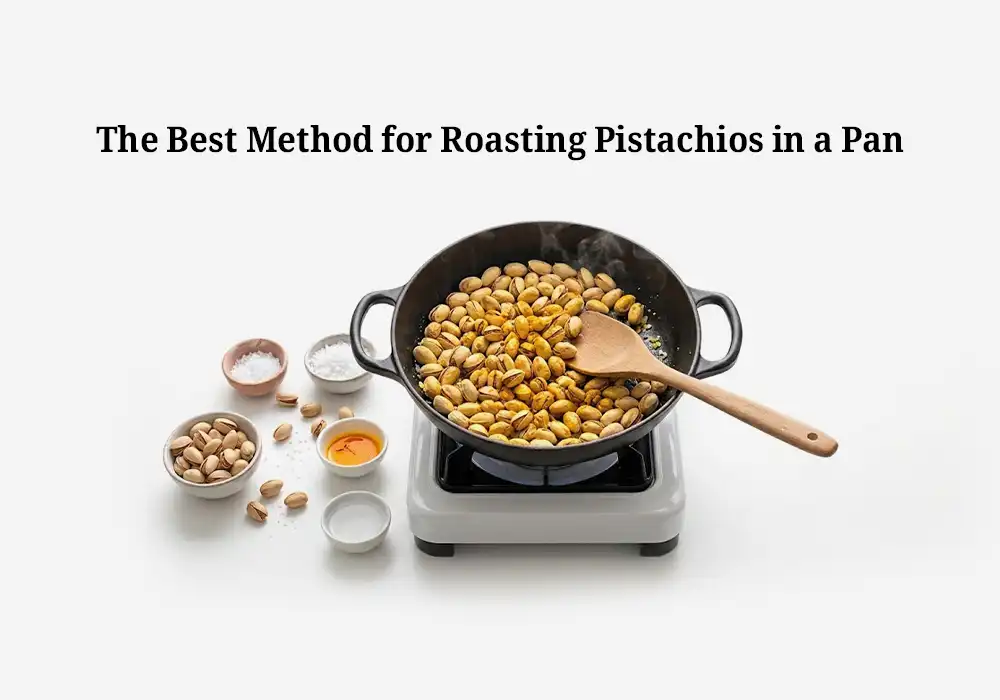
The Best Method for Roasting Pistachios in a Pan (The Alchemy of Royal Flavors in Your Kitchen)
When a sudden craving for a warm, savory, and intensely crunchy snack strikes on a crisp autumn evening, absolutely nothing can rival the intoxicating aroma of pistachios actively roasting on a kitchen stove. The rhythmic, acoustic crackling of bony shells striking the bottom of a heavy iron skillet, combined with the majestic steam of pure saffron, sea salt, and fresh lemon juice billowing through your home, creates a sensory experience that completely hijacks all five human senses.
But why should we invest the effort to roast pistachios at home when supermarket shelves are overflowing with pre-packaged, salted nuts? The profound answer lies in absolute health, uncompromising quality, and the purity of flavor. To camouflage stale, old inventory, industrial processing plants ruthlessly drown their pistachios in highly concentrated vats of industrial sodium, synthetic citric acids, and illegal artificial yellow dyes. As we meticulously dissected in our metabolic analysis of Raw vs. Salted Pistachios, these commercial nuts not only lose their miraculous medicinal properties but rapidly transform into a ticking time bomb for high blood pressure and cardiovascular stress.
When you take a batch of premium raw pistachios and dry-roast them in your own skillet, the absolute control over every single variable—the purity of the salt, the caliber of the saffron, and the intensity of the thermal energy—rests entirely in your hands. In this highly comprehensive, deeply specialized culinary masterclass, we will elevate you from a casual consumer into a "Master of Artisanal Nut Roasting." We will penetrate the chemical reactions occurring within the kernel and teach you exactly how to utilize a simple frying pan to forge a flavor profile that the most elite luxury dry fruit boutiques on earth cannot replicate.
1. The Science of Roasting: The Maillard Reaction in Your Skillet
Before you even ignite the stove's burner, you must comprehend the microscopic events occurring at the cellular level of the nut when subjected to heat. Roasting a pistachio is not merely about making it hot; it is about violently triggering a complex, beautiful chemical transformation known in molecular gastronomy as the "Maillard Reaction" (non-enzymatic browning).
The pistachio kernel is incredibly dense with raw amino acids (proteins) and natural botanical sugars. As the floor of the skillet heats up and transfers that thermal energy into the core of the nut, these sugars and proteins aggressively collide and fuse, synthesizing hundreds of entirely new, highly complex flavor and aroma compounds. This is the exact same chemical miracle that gives seared steak its savory crust and freshly baked bread its heavenly scent. The primary difference between a kitchen oven and a frying pan lies in the thermodynamics of heat transfer. An oven relies on hot air circulation (convection), which dries the nut uniformly. A pan, however, relies on direct physical contact (conduction). This intense direct contact slightly scorches specific raised edges of the pistachio shell, imparting a remarkably rustic, subtly smoky, and artisanal characteristic to your batch that industrial convection ovens simply cannot simulate.
2. The Magical Formulation: Engineering the Flavor Brine
To ensure that your luxurious flavors penetrate the dense meat of the kernel, you cannot simply sprinkle dry salt over the pan; dry salt crystals will physically bounce off the hard bony shells and helplessly burn at the bottom of the skillet. You must engineer a "liquid flavor serum."
To flawlessly coat one kilogram of raw pistachios, you must prepare the following brine:
- Purified Water: Half a cup (Water acts as the biological vehicle to transport the flavors into the nut).
- Sea Salt or Himalayan Pink Salt: Two tablespoons (Unlike harsh, industrial iodized salt, these natural salts possess a milder, sweeter salinity that prevents chemical bitterness).
- Brewed Premium Saffron: Three tablespoons of a highly concentrated brew (Saffron imparts not only a regal, golden hue but a profoundly majestic, floral aroma).
- Acidic Catalyst (Optional): One tablespoon of freshly squeezed lemon juice. The natural acid cuts through the heavy lipids of the pistachio, dramatically elevating and highlighting the savory notes on your palate.
Vigorously whisk these ingredients in a small glass bowl until every single salt crystal has completely dissolved into the golden liquid.
3. The Thermal Operation: Step-by-Step Pan Roasting
The moment has arrived to conduct this culinary symphony. To gain a deeper understanding of this alchemy and explore alternative methods like oven-baking, we highly advise studying our comprehensive tutorial on How to Roast and Salt Pistachios at Home as an ultimate reference guide.
Phase One: Awakening the Lipids (The Dry Roast)
Place a heavy-bottomed skillet (preferably cast iron or thick stainless steel) over a medium flame and allow it to become blistering hot. Never use thin, damaged, non-stick Teflon pans for this operation. Pour your raw pistachios directly into the dry, scorching pan—absolutely no cooking oil is required! Utilizing a wooden spatula, continuously and relentlessly stir the nuts. After approximately five to seven minutes, the stark white color of the bony shells will begin to dull slightly, and you will distinctly smell the earthy, rich aroma of the pistachio's natural oils bleeding to the surface. This sensory cue confirms that the cellular pores of the nut have dilated and are primed to absorb flavor.
Phase Two: The Steam Shock (Flavor Injection)
While the pistachios are fiercely hot and actively crackling, pour the entire saffron and salt brine directly over them in one swift motion. Instantly, a massive, violent explosion of hissing steam and intoxicating aromas will erupt in your kitchen! This pressurized steam rapidly penetrates the wide natural splits of the pistachios, forcibly carrying the dissolved salt and saffron molecules deep into the structural tissue of the kernel itself.
Phase Three: Fixation and Evaporation
Immediately reduce the flame to a gentle simmer. You must continue stirring the batch constantly. The singular objective in this phase is to entirely evaporate the introduced moisture. Continue agitating the nuts until absolutely zero water remains at the bottom of the skillet, the pistachios appear completely dry, and a beautiful, fine dust of saffron and salt forms a crust over their shells. The exact second the pan is bone dry, kill the heat.
4. The Thermodynamics of the Crunch: Why Are Hot Nuts Rubbery?
At this precise moment, countless amateur chefs commit a fatal miscalculation. They excitedly extract a piping hot pistachio from the skillet, crack it open, and chew the kernel. Upon realizing the meat feels soft, doughy, and rubbery, they panic, assuming they have ruined the batch!
This is a fundamental law of physics: Intense heat liquifies plant fats and softens cellular tissue. For a pistachio to re-establish its rigid, glass-like, crunchy texture, it must undergo a complete cooling cycle. Immediately transfer the hot pistachios out of the pan (to halt the residual cooking process) and spread them in a strict single layer across a cold metal baking sheet or a clean cotton towel. You must allow them to rest undisturbed at room temperature for a minimum of one to two hours until their internal thermal energy has completely dissipated. Once they are cold, chew one; you will be genuinely astonished by the explosive, shattering crunch it delivers.
5. The Chef’s Ultimate Secret: The Pan Cannot Perform Miracles, Genetics Do!
Even if you are a Michelin-starred chef executing these biochemical steps with mathematical perfection, if your foundational ingredient—the raw pistachio itself—is closed-mouth, immature, or lacking in natural fat, your final product will be a bitter, woody disaster. For the saffron and salt to actually touch the meat, the nut must possess a "100% natural, wide-open smile." For the kernel to withstand the direct scorching heat of the skillet without turning into charcoal, it must boast an exceptionally high percentage of natural lipids.
Within the global empire of premium nuts, the Ahmad Aghaei Pistachio is the undisputed king of roasting. This aristocratic variety features an organically massive, gaping split that provides the saffron brine direct, unrestricted access to the kernel. Furthermore, its intensely high fat content and dense cellular structure allow it to bravely endure the direct conduction heat of the iron skillet, transforming not into burnt ash, but into an infinitely sweet, buttery, and breathtakingly crunchy delicacy.
The Walmondhe engineering and trading group proudly supplies the most massive, pristine, and flawless raw Ahmad Aghaei pistachios directly from Iran’s most prestigious orchards. Guaranteed to be 100% naturally split with zero closed or empty shells, our pistachios serve as the absolute perfect, flawless canvas for your culinary artistry, empowering you to forge the most luxurious saffron nuts your guests have ever tasted.
To secure bulk commercial orders for premium roasting facilities, organic retailers, inquire about real-time export pricing, and receive highly specialized consultation, connect with our commercial sales department through the official channels below:
- Direct & Fast WhatsApp Communication: +989136667618
- Direct Sales Department Telephone: +989136667618