
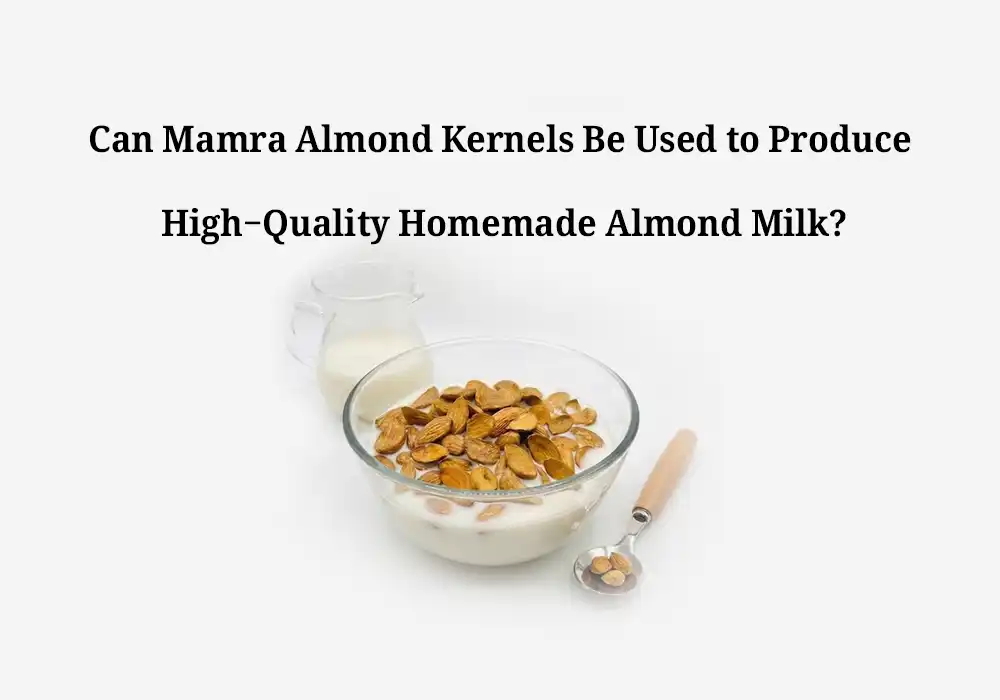
Can Mamra Almond Kernels Be Used to Produce High-Quality Homemade Almond Milk? (A Comprehensive Guide)
With growing awareness around plant-based nutrition, lactose intolerance, and clean eating, nut-based dairy alternatives have gained immense popularity worldwide. Among these, almond milk stands out as one of the most versatile and nutritious substitutes for cow's milk. However, the sensory and nutritional quality of homemade almond milk is fundamentally dictated by the variety of almond selected.
Nutritional enthusiasts and culinary experts often ask: "Is using Mamra Almonds justified for homemade almond milk? Does the high natural oil content of this variety create a creamier texture and superior flavor profile?"
This article provides a biochemical and practical analysis of extracting milk from authentic Saman Mamra almond kernels, highlighting the distinct advantages it holds over conventional almond varieties.
1. Why Mamra Almonds Are the Superior Choice for Almond Milk
The definitive answer is yes; Mamra almonds yield the highest caliber of natural almond milk. This excellence stems from the distinct physiological traits of the Saman cultivar:
- Naturally Rich Creaminess (>50% Healthy Fats): Standard commercial almonds typically feature an oil content between 35% and 42%, yielding a thin and watery extract. In contrast, Saman Mamra almonds boast over 50% to 54% natural lipids, producing a dense, velvety, and naturally micro-emulsified milk reminiscent of light cream. Review standard parameters in Standard Kernel Yield & Oil Content of Mamra Almonds.
- Inherent Sweetness Without Additives: Mamra almonds are 100% sweet and carry a distinct buttery undertone, eliminating any necessity for refined sugars, honey, or artificial flavor enhancers.
- Superior Emulsion Stability: The high concentration of oleic and linoleic fatty acids in Saman Mamra kernels creates stable colloidal bonds with water molecules, significantly delaying phase separation in refrigeration. For further genetic insights, explore Mamra Almond Lipid Profile, Genetics & Valuation.
2. Nutritional Comparison: Mamra Milk vs. Industrial Almond Milk
Commercial carton milk found in supermarkets usually contains merely 2% to 3% actual almond content, with the remainder consisting of water, synthetic thickeners, gums, and preservatives. Conversely, raw milk produced from Mamra kernels is a potent nutritional concentrate:
- Highly Bioavailable Minerals: Rich in plant-based calcium, magnesium, and phosphorus, it supports bone mineral density without causing digestive distress.
- High Potency Vitamin E: The abundant alpha-tocopherol naturally present in Mamra oil is extracted into the lipid phase, acting as a powerful antioxidant for cardiovascular health and dermal hydration.
- Completely Lactose and Cholesterol-Free: An ideal metabolic beverage for individuals managing dairy allergies or cholesterol profiles. Learn more about its macro-composition in Scientific Review of the Nutritional Composition of Almonds.
3. Step-by-Step Guide to Crafting Thick Mamra Almond Milk
To optimize yield and preserve active enzymes, follow this precise extraction protocol:
- Step 1 (Activation & Peeling): Soak one cup (approx. 150g) of raw Mamra almond kernels in filtered water for 12 to 24 hours. Soaking deactivates phytic acid and allows effortless blanching. For detailed soaking mechanics, review Raw, Roasted, or Soaked: The Best Way to Eat Almonds for 100% Vitamin Absorption.
- Step 2 (High-Speed Blending): Combine the peeled kernels with 3 to 4 cups of chilled purified water in a high-speed blender. Process on maximum velocity for 2 to 3 minutes until completely homogenized.
- Step 3 (Micro-Filtration): Pour the emulsion through a fine nut-milk cloth or cheesecloth, expressing all liquid manually. Retain the nutrient-dense almond pulp for gluten-free baking, crackers, or artisanal granola. See recipe concepts in Almond & Protein Granola Recipe.
Comparative Matrix: Mamra Homemade Milk vs. Commercial Brands
| Parameter | Homemade Saman Mamra Milk | Commercial Carton Milk |
|---|---|---|
| Nut Concentration | 25% to 30% Pure Kernel | 2% to 5% Maximum |
| Texture & Viscosity | Naturally dense, smooth, and creamy | Artificially thickened with guar/gellan gums |
| Preservatives & Additives | 100% Clean, zero chemicals | Contains synthetic stabilizers & added sugars |
| Lipid & Vitamin Preservation | Full retention of active Vitamin E & oils | Degraded via industrial ultra-pasteurization |
4. Economic Optimization: Choosing the Right Grade for Extraction
Purchasing oversized jumbo grades (such as Grade 5A) for blending is not financially optimal since the kernel geometry is completely broken down during processing.
- The Strategic Choice: Utilize medium grades (3A or 2A), mini sizes, or broken/split Mamra kernels. These grades deliver the exact same 50%+ lipid profile and rich flavor at a substantially lower cost per kilogram. Explore pricing variations in Comprehensive Comparison Between the Sizes of Different Almond Grades in Iran.
5. Direct Sourcing from Walmondhe Processing Facilities
The Walmondhe enterprise, situated directly within the Saman orchard belt, supplies premium, current-crop Mamra almonds in tailored grades for individual and commercial operations:
- Guaranteed High-Oil Current Crop: All kernels supplied by Walmondhe are guaranteed current-year harvest, ensuring peak oil concentration and exceptional milk extraction yields. Read more in Is Walmondhe a Direct Supplier from Saman Farmers?.
- Sanitary Vacuum Packaging: Shipped in airtight, food-grade vacuum packaging to prevent any oxidation of delicate fatty acids.
To request wholesale pricing on Mamra Almonds and Iranian Moheb Almonds, reach out to our trade department:
- Direct WhatsApp Support: 09136667618
- Sales Department Phone: 09136667618
- Global Export Details: Review Why Walmondhe is the Best Choice for Wholesale Almonds & Exports