
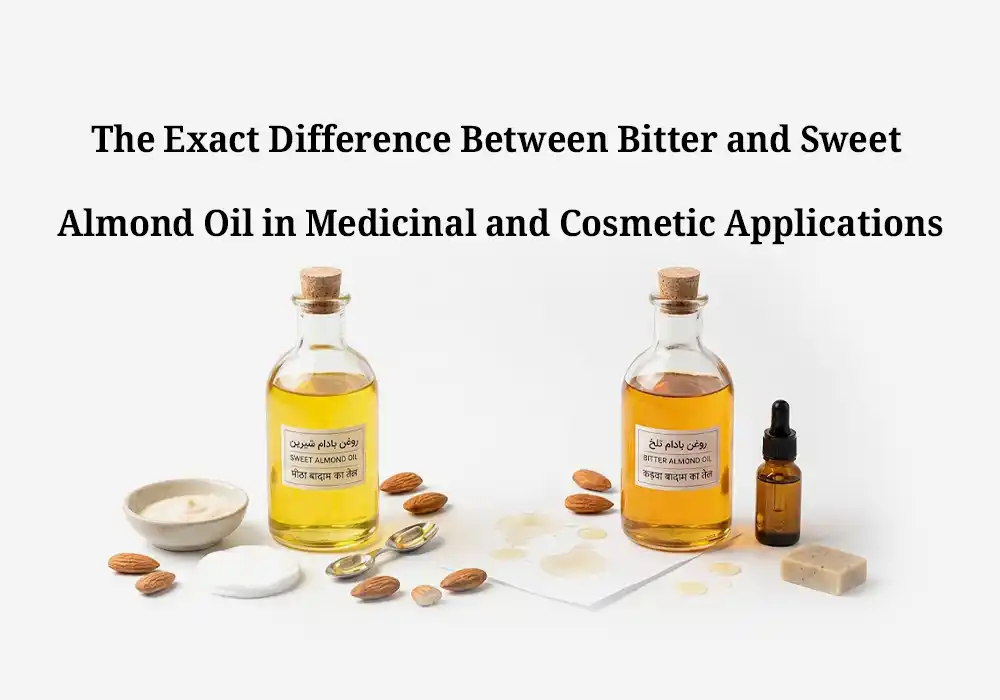
The Exact Difference Between Bitter and Sweet Almond Oil in Medicinal and Cosmetic Applications (A Complete Analysis)
When you walk into an herbal apothecary or a natural cosmetics store to purchase a product for skin care, hair strengthening, or relieving joint pain, you are often confronted with two nearly identical glass bottles: one labeled "Sweet Almond Oil" and the other "Bitter Almond Oil." Both share the same radiant, golden hue and look entirely identical.
At this moment, many buyers experience a sense of hesitation. They ask themselves: "What exactly is the difference between these two oils? If I am looking to remove dark circles under my eyes, which one should I pick? What about treating knee pain? Can I use them interchangeably, or could the wrong choice harm my health?"
In this comprehensive article, we will embark on a fascinating journey deep inside the cells of these two valuable seeds. By closely examining their intrinsic properties, we will uncover their therapeutic and cosmetic secrets. We will discover how nature created two extracts with completely different applications from the same tree family—one meant for gentle nourishment and hydration, and the other for powerful, targeted medicinal treatments.
1. The Root of the Difference: Two Trees, Two Completely Different Natures
To understand the difference between the extracts, we must first return to their origin. The almond tree exists in nature under two distinct botanical lineages.
- The Sweet Almond Tree: This tree produces seeds like the premium Mamra Almonds, which are incredibly rich in healthy fats, proteins, and plant sugars. These seeds are completely edible, safe, and highly delicious.
- The Bitter Almond Tree: Visually, this tree looks identical to its sweet sibling. However, inside its seeds, it manufactures a defensive, toxic compound named "Amygdalin." This substance evolved in nature to prevent wild animals from eating the seeds. The primary difference between the two oils stems entirely from the presence or absence of this compound. To study the biological anatomy of these two seeds, you must review the specialized article: Bitter vs. Sweet Almond? Differences, Cyanide Poisoning Risks, and Industrial Uses.
2. Sweet Almond Oil: The Skin's Ultimate Food and the King of Hydration
Sweet almond oil is an exceptionally mild, lightweight extract loaded with protective vitamins (such as Vitamin E). Because its molecular structure is highly similar to the natural lipids secreted by human bodily glands, it is absorbed into tissues with remarkable speed.
A) Primary Cosmetic and Care Applications
- Deep Hydration and Curing Dryness: This oil acts as a protective barrier over skin pores, stopping the evaporation of cellular water. Massaging it onto severely dry areas like elbows, knees, and heels works absolute miracles.
- Reducing Dark Circles and Eye Puffiness: Due to its incredibly light texture, gently rubbing a few drops around the eyes improves capillary blood circulation, gradually fading dark circles over time.
- Repairing Damaged Hair Shafts: If your hair has become brittle and dry from chemical dyes or constant blow-drying, sweet almond oil is the ultimate remedy for coating the hair shafts and preventing split ends.
B) Oral and Nutritional Applications
The oil extracted from the sweet almonds of the Saman region is 100 percent edible. Consuming a few drops of this oil alongside salads or meals significantly improves intestinal function, cures constipation, and regulates blood cholesterol levels. To better understand the impact of these compounds, read Scientific Review of the Nutritional Composition of Almonds.
3. Bitter Almond Oil: A Powerful Medicine and Specialized Healer
If we consider sweet almond oil to be a "gentle moisturizer," bitter almond oil must be recognized as a "powerful therapeutic medicine." Because of the amygdalin content, this oil possesses a deeply penetrating aroma and must never, under any circumstances, be consumed orally, as swallowing it is highly toxic and dangerous. All applications for this extract are strictly topical and for external rubbing.
A) A Remedy for Joint and Muscle Pain
One of the most astonishing properties of bitter almond oil is its localized numbing and soothing effect. When you massage this oil onto inflamed joints (such as arthritic knees or muscles cramping after intense sports), its active compounds penetrate deep into the tissues, temporarily calming the nerve endings that transmit pain. This unique trait has made it one of the most highly sought-after extracts in professional massage therapy clinics.
B) Treating Stubborn Skin Blemishes and Freckles
Bitter almond oil possesses an incredibly potent exfoliating and repairing property. Consistent nightly massaging of this oil over brown spots, old acne scars, and freckles breaks down the dark pigmentation trapped beneath the skin, gradually lightening and evening out the skin tone.
C) Awakening Dormant Hair Follicles
Unlike sweet almond oil, which benefits the "hair shaft," bitter almond oil is considered a definitive treatment for the "hair root." Vigorously massaging this oil into the scalp, eyebrows, and even men's beards vastly increases blood circulation within the follicles, stimulating weak and dormant roots into renewed growth.
4. The Role of Almond Oils in Ancient Medicine and the Indian Market
The country of India is one of the largest consumers of these two golden extracts globally. In ancient Indian medicine (Ayurveda), sweet almond oil is believed to possess a balanced, nourishing nature that regulates bodily heat. Indians extensively use this oil for the daily massage of infants and children, ensuring their bones grow strong and their skin builds resistance.
In contrast, bitter almond oil is recognized as a toxin-expelling element and is heavily utilized in formulating pain-relief ointments and potent anti-hair-loss remedies. The immense demand in the Indian market reflects the unparalleled quality and healing power of these products. To familiarize yourself with this culture, reading Health Benefits of Mamra Almonds & Why They Are Popular in India will be highly engaging.
Quick Guide Table: Practical Differences at a Glance
| Feature & Application Type | Sweet Almond Oil (Natural & Mild) | Bitter Almond Oil (Medicinal & Potent) |
|---|---|---|
| Safety for Oral Consumption | Completely safe, nutritious, edible | Strictly Forbidden & Dangerous (Topical only) |
| Primary Hair Application | Fixing dryness & repairing hair shafts | Stopping hair loss & boosting roots/eyebrows |
| Primary Skin Application | Deep hydration, removing dark circles | Eradicating brown spots and skin freckles |
| Medical & Therapeutic Use | Improving digestion & bowel function | Soothing joint pain, arthritis & muscle cramps |
| Aroma and Scent of Extract | Very mild, neutral, and delicate | Extremely strong, penetrating, crushed-blossom scent |
5. The Walmondhe Commitment to Purity and Authenticity
Obtaining an oil that genuinely delivers all the aforementioned benefits is only possible if the extraction process is conducted away from destructive heat (via cold-pressing methods) and without the addition of any chemical fillers. Unfortunately, the market is overflowing with blended oils that merely borrow the almond name.
The Walmondhe engineering and trading group, maintaining a permanent presence in the heart of the Saman orchards, procures the finest seeds directly from the farmers. All our cargoes are prepared without the interference of any chemical processes, ensuring that the vitamins, minerals, and therapeutic structures remain entirely untouched. To better understand our exclusive supply chain, read the article Is Walmondhe a Direct Supplier from Saman Farmers?.
To receive consultation for wholesale purchases, export operations, and to get the daily pricing for the purest export-grade varieties, connect with our sales department through the official paths below:
- Direct WhatsApp Line: 09136667618
- Sales Department Phone: 09136667618