
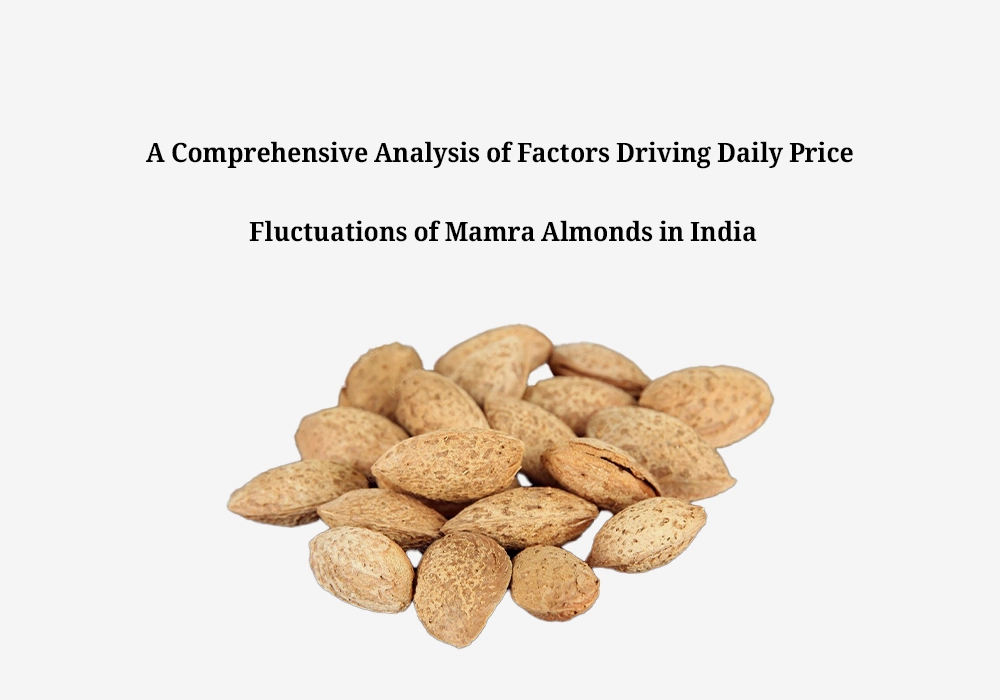
A Comprehensive Analysis of Factors Driving Daily Price Fluctuations of Mamra Almonds in India
Exporting to the world's largest dried fruit trading hub—the Indian market—is a double-edged sword. Many suppliers enter this ecosystem anticipating massive profitability, only to face severe Capital Erosion. The root cause? A fundamental misunderstanding of the granular parameters that shape daily pricing. In India's highly structured yet violently volatile market, your profit margin is not dictated solely by the initial procurement price from the farmer. It heavily relies on your capacity to forecast and decode daily micro-trends that alter the Landed Cost in real-time. Utilizing a Skyscraper approach, this article anatomizes the hidden and apparent drivers of almond price fluctuations, elevating you from a traditional exporter to an international marketing strategist.
The Anatomy of the Indian Market: Asymmetric Information and Financial Risk
The most critical pain point for international exporters dealing with the Indian market is the phenomenon of Asymmetric Information. You may have sourced a commodity with incredibly high intrinsic value, yet upon customs clearance at Nhava Sheva or during wholesale distribution in Delhi's Khari Baoli, you discover the brokers' Bid Prices drastically contradict your initial ROI projections. This discrepancy is not merely market instability; it is the direct result of ignorance regarding the continuous variables that govern India's Dynamic Pricing system.
Failing to grasp these variables means surrendering your definitive profit to local arbitrageurs. If you cannot decode price-altering signals before they manifest, your Penetration Pricing strategy will inevitably collapse, forcing a Fire Sale. The absolute solution is the implementation of a rigorous monitoring framework targeting both macro and microeconomic Indian indicators, which we will analyze systematically.
Macroeconomic and Geopolitical Drivers in Price Formulation
Daily price fluctuations of Mamra almonds in India are dictated by macroeconomic indicators and governmental currency policies long before quality assessments even occur. These factors daily impact the purchasing power of Indian importers and, consequently, their requested buying prices.
- INR/USD Volatility (Currency Parity): The Indian market is hyper-sensitive to the Rupee's value against the US Dollar. Indian importers settle their international invoices in USD, while their domestic wholesale revenue is generated in INR. Any depreciation of the Rupee instantly inflates the importer's Landed Cost. To preserve their margins in a price-sensitive domestic market, importers immediately push back against the supplier's FOB price, demanding daily discounts. Implementing strict Currency Hedging is a mandatory component of financial risk management in exports.
- Tariff Barriers and Seasonal Quotas: To protect domestic agricultural outputs and control foreign exchange reserves, India utilizes a highly dynamic tariff structure. Sudden adjustments to the Basic Customs Duty (BCD) or the imposition of infrastructure cesses on imported goods immediately send shockwaves through the target market's wholesale pricing. Anticipating these regulatory shifts and timing your shipments accordingly provides an Absolute Advantage.
- Marine Logistics Variable Costs: Fluctuations in container leasing rates, Bunker Surcharges (fuel costs), and transit port congestion are all variables that shift daily, directly impacting the final CIF price of the commodity upon arrival in India.
Supply and Demand Dynamics: Festival Impacts and Psychological Parameters
In India, the Mamra almond is not merely a snack; it is a vital botanical medicine within the Ayurveda system and a premier luxury gifting commodity during festivals. This unique positioning creates periods of highly Inelastic Demand.
- The Hindu Festival Calendar (The Diwali Effect): In the weeks leading up to Diwali and Dhanteras, the demand for Corporate Gifting packages skyrockets exponentially. During this window, the market experiences a severe Supply Shock, driving prices up mathematically. Exporters who perfectly time their logistics to hit this demand peak—while maintaining strict warehousing standards—will maximize their ROI.
- Health-Centric Factors and Therapeutic Value: Indian consumers possess a deep-rooted awareness of Mamra's therapeutic properties. To fully comprehend this intrinsic value—which effortlessly justifies the commodity's premium pricing—reviewing the Scientific review of the nutritional composition of almonds is crucial. This Perceived Value ensures that end-consumers exhibit high resistance to daily price hikes.
- Hoarding and Cartel Price Manipulation: The Khari Baoli wholesale market is heavily influenced by powerful local cartels that control daily supply by hoarding inventory in cold storage facilities. By closely monitoring inbound container traffic at the ports, they artificially inflate or suppress daily spot prices, a risk that isolated exporters struggle to navigate.
Qualitative Factors: The Impact of Sorting on Micro-Fluctuations
Beyond macroeconomic shifts, the physical parameters of your cargo directly dictate its daily valuation by Indian Assayers. In the Indian Mamra sector, a one-millimeter deviation in size or a single percentage increase in bitterness can shift the per-kilogram price by several dollars.
- Calibration and Grading Consistency: The Indian market demands absolute uniformity in sizing. Shipments boasting seamless laser-sorting suffer minimal daily price depreciation during broker negotiations. To master these stringent calibration standards, studying the Comprehensive comparison between the sizes of different almond grades in Iran is a vital step for your QA department.
- Freshness Index and Moisture Content: Cargoes exceeding standard moisture thresholds suffer rapid Shelf-life Degradation in India's highly humid climate. Wholesale buyers utilize digital hygrometers to identify high-risk shipments, purchasing them only at heavily Discounted Prices. Executing precise quality control protocols, identical to those detailed in How to determine the freshness of almond kernels in domestic and export markets, is non-negotiable for preserving cargo value.
Hedging Strategies and the Walmondhe Ecosystem
Operating within such a turbulent marketplace requires a Data-Driven infrastructure and a strategic partner capable of neutralizing the risks associated with daily volatility. The Walmondhe platform is engineered specifically to resolve the asymmetric information crisis and stabilize exporter profit margins.
When you source and export the Mamra almond through Walmondhe's structured B2B ecosystem, you deploy a defensive shield against Indian market arbitrageurs. By providing real-time data on pricing trends, Walmondhe transitions your pricing strategy from a Reactive stance to a highly Proactive one.
Furthermore, relying exclusively on an ultra-luxury commodity carries inherent concentration risks. Portfolio Diversification is a core tenet of financial risk management. Walmondhe facilitates the stable procurement of highly liquid commercial grades, such as the Iranian Moheb almond, ensuring your Cash Flow remains uninterrupted during unexpected currency shocks. By eliminating unnecessary intermediaries and enforcing rigorous quality standardization, Walmondhe guarantees a definitive, competitive FOB price engineered to yield the highest possible ROI against destination market volatility.
Conclusion
The daily price fluctuation of Mamra almonds in the Indian market is not a random occurrence; it is the mathematical outcome of complex currency interactions, customs tariffs, and seasonal consumption patterns. The most successful exporters do not flee from volatility; they are strategists who leverage Market Intelligence to weaponize these fluctuations to their advantage. By implementing Value-Based Pricing, strictly adhering to sorting standards, and unifying your export operations through the Walmondhe platform, you neutralize financial risks and establish a dominant, highly profitable footprint within India's lucrative Niche Market.
Frequently Asked Questions (FAQ)
How exactly does the INR to USD fluctuation impact the requested price from Indian buyers? When the Rupee depreciates, Indian importers must spend more INR to acquire the same amount of USD, instantly inflating their Landed Cost. Because raising retail prices in a price-sensitive domestic market is difficult, importers immediately transfer the financial pressure upstream, demanding a reduction in the supplier's USD FOB price.
Does cargo arrival timing regarding Indian festivals genuinely affect profit margins? Absolutely. Markets experience massive Demand Surges during festivals like Diwali. Cargo that clears customs exactly 6 to 8 weeks prior to these events sells at the annual Peak Price. Delays result in post-festival Demand Crashes, forcing the exporter to liquidate assets at a severe loss.
How does the Walmondhe platform mitigate daily price fluctuation risks for suppliers? Walmondhe mitigates risk by enforcing exact grading standardization, guaranteeing cargo health (which eliminates Assayer-driven price drops), and supplying Data-Driven insights on Market Trends. This empowers you to base your pricing strategies on hard data rather than market hysteria, thereby protecting your ROI from illogical broker negotiations.