
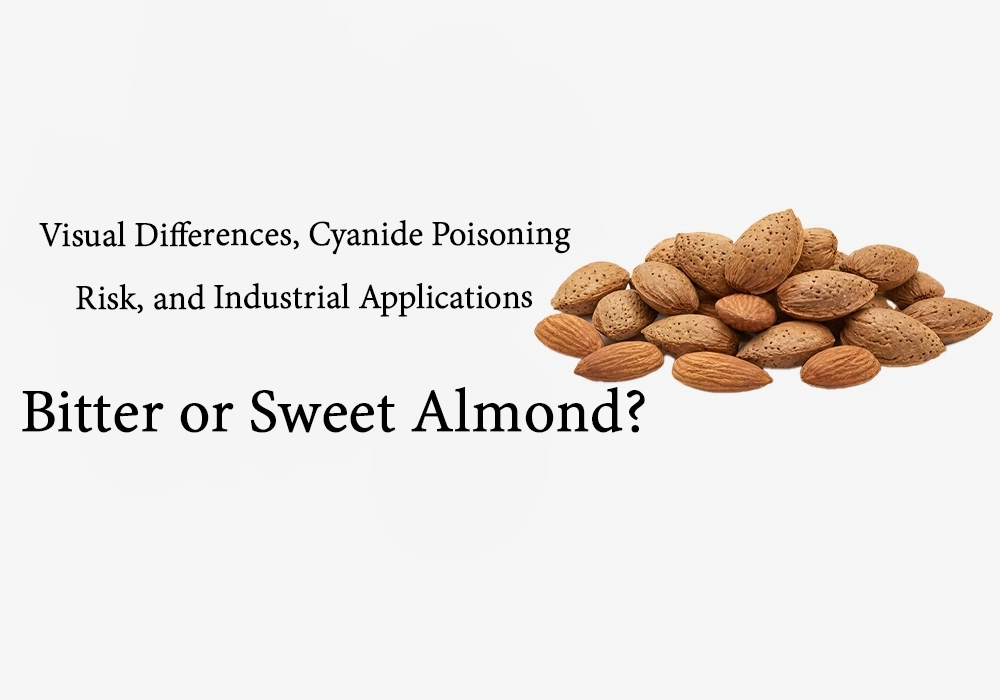
Bitter vs. Sweet Almonds: How to Identify the Silent Killer (Cyanide) and Avoid Poisoning?
In the world of dried fruits, the almond is a symbol of health. But lurking in the shadow of this brilliant reputation is an "evil twin" that can be deadly: The Bitter Almond. It may surprise you to know that sweet and bitter almonds are genetically very close cousins, but a tiny difference in DNA turns one into an "Energy Bomb" and the other into a "Cyanide Capsule."
Many of our clients at Walmondhe ask: "Why do we sometimes find a single bitter almond in a sweet cargo?" or "Can I use bitter almonds for oil extraction?" In this specialized and vital article, we put on our laboratory safety gear and enter the dangerous yet fascinating world of Amygdalin. Take these warnings seriously; knowing these points could save a child's life.
Genetic Difference: Why is One Sweet and the Other Lethal?
Botanically, the Sweet Almond (Prunus dulcis var. dulcis) and the Bitter Almond (Prunus dulcis var. amara) belong to the same family. The difference lies in a single recessive gene.
The Chemistry of Death: What is Amygdalin?
Bitter almonds contain a substance called Amygdalin (a type of cyanogenic glycoside). This substance is not toxic on its own. However, when you chew or crush a bitter almond and it mixes with water (saliva), an enzyme called Emulsin is activated. This enzyme hydrolyzes (breaks down) Amygdalin into three substances:
- Sugar (Glucose).
- Benzaldehyde: The agent responsible for the specific bitter, marzipan-like smell.
- Hydrogen Cyanide (HCN): The deadly cyanide gas!
In sweet almonds, this gene is inactive, and the amount of Amygdalin is so negligible that it poses no risk. But in bitter almonds, the concentration is up to 40 times higher.
How to Visually Distinguish Bitter from Sweet Almonds? (Physical Guide)
Distinguishing these two is notoriously difficult, and even experienced farmers sometimes make mistakes. However, there are signs you must inspect closely.
1. Differences in Kernel Appearance
If you place two kernels side by side:
- Sweet Almond: Usually elongated, slender, and symmetrical (especially in varieties like Mamra Almond). Its brown skin has regular grooves and ridges.
- Bitter Almond: Usually "Broader," "Shorter," and slightly "Heart-shaped." The tip of the bitter almond tends to be sharper, and its curvature appears slightly asymmetrical.
2. Difference in Tree Blossom
If you are an orchard owner, identification is easier during spring:
- Sweet Almond Tree: Has blossoms with a White center.
- Bitter Almond Tree: Has blossoms with a Pink center. Beautiful, but deceptive!
3. The Smell Test (Olfactory Check)
This is the safest non-tasting method.
- Bitter almonds have a very strong, sharp scent (similar to cherry extract or apricot kernels). This is the smell of Benzaldehyde. Sweet almonds have a mild, nutty aroma.
Safety Tip: Never chew a whole almond to test it. Touch it with the tip of your tongue; if it tastes bitter, spit it out immediately and rinse your mouth.
Cyanide Poisoning Risk: How Many Bitter Almonds Are Fatal?
Read this section carefully. Cyanide poisoning is not a joke. Cyanide binds to hemoglobin in the blood (specifically cytochrome c oxidase) and prevents oxygen from reaching cells. Simply put, cells "suffocate" despite being surrounded by oxygen.
Lethal Dose (LD50)
According to toxicological research:
- For Children: Consuming 5 to 10 raw bitter almonds can be fatal.
- For Adults: Consuming 50 bitter almonds can lead to death. (However, severe poisoning symptoms appear with much fewer numbers).
Symptoms of Poisoning
Symptoms usually appear 15 minutes to 1 hour after consumption:
- Dizziness and severe headache.
- Nausea and vomiting.
- Heart palpitations and shortness of breath (Dyspnea).
- Cyanosis: Lips and fingernails turning blue due to lack of oxygen.
- Convulsions and Coma.
Immediate Action: If a child ingests bitter almonds, take them to the Emergency Room immediately. Inducing vomiting is only permissible under medical supervision.
Why Do Farmers Still Grow Bitter Almond Trees? (Agricultural Utility)
If bitter almonds are so dangerous, why aren't they eradicated? Why do they still exist in orchards? The answer lies in "Survival Strength."
Use as "Rootstock"
The bitter almond tree is incredibly resilient, hardy, and wild.
- Pest Resistance: Root worms (Capnodis) and other pests attack it less frequently (perhaps due to the cyanide poison itself).
- Drought Resistance: It has deeper taproots. Smart farmers plant bitter almond seedlings and then "Graft" a sweet almond branch (like Stone Almond/Shahroudi 12) onto them. Thus, they get a tree with "Resistant Bitter Roots" and "Delicious Sweet Fruits."
Industrial and Medicinal Applications: When Poison Becomes Medicine
In pharmacology, the dose makes the poison. Bitter almonds have high value in industry.
1. Oil Extraction (Bitter Almond Oil)
Bitter almond oil is one of the best-selling vegetable oils. But pay attention:
- Edible Use: Strictly Prohibited (unless it has undergone a complex Rectification process to remove cyanide).
- Topical Use: Used to treat joint pain, hair loss (with caution), and skin infections. To understand the exact differences in properties, read Sweet vs. Bitter Almond Oil Benefits.
2. Cosmetics and Perfumery
Remember the distinct scent of old-fashioned soaps and lotions? That scent comes from Benzaldehyde extracted from bitter almonds. Today, synthetic compounds are mostly used, but luxury brands still utilize the natural extract (cyanide-free).
Can You Debitter Bitter Almonds? (Is it Safe?)
In some cultures, bitter almonds are "de-bittered" using traditional methods to make them edible.
- Process: Soaking almonds in water for several days, constantly changing the water, followed by boiling or roasting.
- The Science: Cyanide is volatile and sensitive to water and heat. This process causes the cyanide to leach out and evaporate.
- Walmondhe Warning: We DO NOT recommend attempting this at home. If the process is incomplete, the poison remains in the center of the kernel.
International Regulations: What Does the FDA Say?
In the United States, the sale of Raw Unprocessed Bitter Almonds is strictly Prohibited. The USDA enforces rigorous laws regarding this. However, in the Middle East and parts of Europe, bitter almonds can be found in herbal shops. This easy access doubles our responsibility to raise awareness.
When buying sweet almonds, there might occasionally be a 1% or 2% presence of bitter almonds in the cargo (especially in mixed or low-quality bulk). However, in our sorted and luxury cargoes at Walmondhe, this probability approaches zero. We use advanced sorting machines and random taste testing to ensure the cargo is 100% sweet.
Conclusion: Do Not Sacrifice Safety for Price
The bitter almond is both a medical miracle and a latent danger. The difference between it and the sweet almond is a fine line between health and poisoning.
Walmondhe's Final Advice to Buyers:
- NEVER buy bitter almonds for edible consumption by children.
- If you intend to buy bitter almond oil, ensure it is labeled "External Use Only."
- For edible almonds, always buy from reputable brands that have a rigorous sorting process to eliminate those annoying bitter kernels.
Are you looking to buy Paper Shell/Moheb Almonds or Stone Almonds with a 100% Sweetness Guarantee? Our products pass through 3 stages of quality control so that a bitter taste never ruins your sweet purchasing memory.