
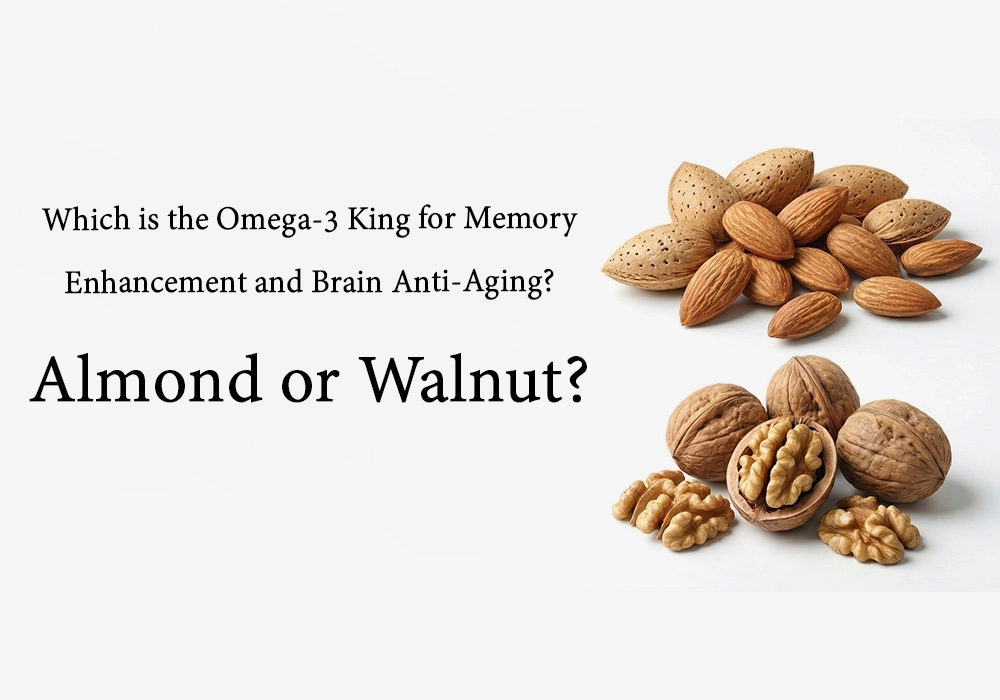
Almonds vs. Walnuts: Which is the Omega-3 King for Memory and Anti-Aging? (Scientific Battle - 2025 Update)
In popular culture and traditional medicine, it has always been said: "Eat walnuts because they look like a brain!" This Morphological Similarity has allowed the walnut to be known as the undisputed king of memory. However, in 2025, with advancements in Nutritional Neuroscience, this throne is shaking. A fierce competitor has entered the arena with a different, powerful weapon: The Almond.
The main question is: To possess a mind that works like clockwork, maintains high focus, and avoids Dementia in old age, which one should we invest in? In this specialized article by Walmondhe, we place brain scans and biochemical analyses on the table to see who wins the battle of "Walnut's Omega-3" versus "Almond's Vitamin E and L-Carnitine."
Is the Walnut's Resemblance to the Brain a Myth or Science?
Let's first clarify the "Doctrine of Signatures." The belief that "if a plant looks like an organ, it is good for it" isn't always true. But in the case of walnuts, it coincidentally turned out to be correct. Walnuts are rich in Alpha-Linolenic Acid (ALA), a type of plant-based Omega-3 fatty acid. The human brain is composed of 60% fat and needs these fats to rebuild neuronal cell membranes. But is that the whole story? No.
The Great Omega-3 "Conversion" Problem
What walnut sellers don't tell you is that the human body struggles to absorb ALA (found in walnuts). The body must convert it through complex hepatic processes into DHA and EPA (the active forms of Omega-3 that the brain actually uses).
- Conversion Rate: Research shows the conversion rate of ALA to DHA in the human body is less than 10% to 15%!
- The Result: So, while walnuts are a "source" of Omega-3, they are not the "magic bullet." This is where the key role of the Almond as a vital supplement begins.
Why Are Almonds the Brain's "Defensive Shield" Against Alzheimer's? (The Vital Role of Vitamin E)
If the walnut is the "Brick" to build the brain's wall, the almond is the "Soldier" guarding it. The human brain is one of the most oxygen-consuming organs and contains a lot of fat. This combination (Oxygen + Fat) means the brain is highly susceptible to "Oxidative Stress" and rusting. Oxidation is the very factor that causes Alzheimer's and Parkinson's.
Tocopherol: The Almond's Secret Weapon
Almonds are the richest natural source of Vitamin E (Alpha-Tocopherol) in the world (37 times more than walnuts!).
- Mechanism: Vitamin E is a fat-soluble antioxidant. It attaches precisely to neuronal cell membranes and, like a bulletproof vest, prevents free radicals from destroying memory cells.
- 2024 Research: Studies in the journal JAMA Neurology have shown that regular almond consumption can slow the progression of mild Alzheimer's and delay "Cognitive Decline" by up to 5 years.
Conclusion: If you want to "build" your brain, walnuts are good. But if you want to "preserve" your brain and prevent its aging, Mamra Almonds (with higher oil and Vitamin E percentage) are essential.
L-Carnitine & Riboflavin: Why Are Almonds "Smart Fuel"?
This is a section often ignored in general articles. The brain needs energy to process information. Almonds contain two nutrients that directly impact "Cognitive Efficiency":
- L-Carnitine: This amino acid is responsible for transporting fatty acids into the mitochondria (the cell's power plant). Meaning, it converts fat into mental energy.
- Riboflavin (Vitamin B2): This vitamin helps improve the function of the electron transport chain in the brain.
The combination of these two makes the almond a "Natural Nootropic" that boosts alertness and brain processing speed. Walnuts lack this powerful combination.
Nutrient Comparison Table: The Battle of Numbers in 28g (One Handful)
Let's put bias aside and look at laboratory numbers. Which one possesses a more complete nutritional profile for the nervous system?
| Nutrient (Per 28g) | Walnut | Almond | Winner for Brain |
|---|---|---|---|
| Omega-3 (ALA) | 2500 mg | Negligible | 🏆 Walnut (Unrivaled in structure) |
| Vitamin E | 0.2 mg | 7.3 mg | 🏆 Almond (37x more - Protection) |
| Protein | 4 g | 6 g | 🏆 Almond (Neurotransmitter production) |
| Magnesium | 44 mg | 76 mg | 🏆 Almond (Learning & Neuroplasticity) |
| Calcium | 28 mg | 76 mg | 🏆 Almond (Neural signaling) |
| Fiber | 2 g | 3.5 g | 🏆 Almond (Gut-Brain Axis health) |
Expert Analysis: Walnuts win on only one front (Omega-3). But almonds win by a landslide in Vitamin E, Protein, Calcium, and Magnesium (vital for synaptic plasticity). To better understand the importance of magnesium in diets, read The Golden Role of Almonds in Low-Carb Diets.
Sleep and Memory: The Missing Key in the Almond vs. Walnut Debate
Short-term memory is converted into long-term memory during "Deep Sleep." If you don't sleep well, the best nutrition is useless.
Walnuts and Melatonin
Walnuts contain some Melatonin (the sleep hormone), which can help regulate the sleep cycle.
Almonds and Magnesium
But almonds have a different strategy. Almonds are rich in Magnesium. Magnesium deepens sleep quality by lowering cortisol levels (stress hormone) and calming the parasympathetic nervous system. Many people don't have trouble "falling asleep," but rather with the "quality of deep sleep." In this area, almonds are more effective. Eating 5 almonds before bed is a natural prescription for calming nerves.
How Does the "Gut-Brain Axis" Tip the Scale for Almonds?
Modern science has proven: "The gut is the human's second brain." Gut bacteria secrete substances that directly affect Mood and Memory.
Almond Skin: Food for Smart Bacteria
The brown skin of the almond is rich in Polyphenols and prebiotic fibers. Walnuts also have skin, but walnut skin is bitter, astringent (high tannins), and often peeled off or disliked.
- Research shows that almond skin fibers promote the growth of Lactobacillus and Bifidobacterium. These bacteria increase the production of Serotonin (happiness hormone) and Dopamine (focus hormone) in the gut, which reach the brain via the Vagus nerve.
- Result: Eating almonds (especially Stone Almonds or varieties kept with skin) can reduce depression and Brain Fog.
The Hidden Danger: Omega-3 Oxidation in Walnuts
A very important point that walnut buyers ignore: Stability. Omega-3 fatty acids (PUFA) found in walnuts are extremely unstable. If walnuts get slightly old, are left in the air, or stored at room temperature, their fats quickly oxidize and turn into "Lipid Peroxides." These toxic substances are not only useless for the brain but are Pro-inflammatory and accelerate brain aging themselves.
The Superior Stability of Almonds
In contrast, almond oil is much more stable due to containing Monounsaturated Fats (MUFA) and being protected by a high concentration of Vitamin E. You can store Paper Shell/Moheb Almonds for months in the cupboard without them losing their cognitive benefits or becoming toxic.
Warning: If a walnut tastes slightly sharp or spicy, throw it away immediately. Eating stale walnuts is worse than not eating them at all. (Detection Guide: How to Detect Fresh vs. Stale Almonds).
The "Obesity & Brain" Link: Why Are Slimming Almonds Better for Intelligence?
You might be surprised, but "Visceral obesity causes brain shrinkage." Research has shown that excess fat tissue secretes inflammatory hormones that damage brain cells.
- Walnut: Very high in calories and its fat is absorbed quickly. Excess walnut consumption can lead to weight gain.
- Almond: The almond cell wall is rigid, and about 20% of its fat is not absorbed by the body. Plus, its high protein and fiber create long-term satiety.
- Result: By controlling weight, almonds indirectly reduce brain inflammation and preserve intelligence. (Read more: Can Almonds Help You Lose Weight?).
From Traditional Medicine Perspective: Temperament
For those interested in holistic health:
- Walnut: Has a Hot and Dry temperament. Excessive consumption causes mouth ulcers, liver heat, and sometimes headaches in choleric individuals.
- Almond: Has a Hot and Moist (Balanced) temperament. Moisture is vital for the brain, as brain dryness is a cause of insomnia and Alzheimer's in traditional medicine. Almonds preserve the brain's "Instinctive Moisture" and suit all temperaments.
The Golden Synergy: How to Use Both to "Supercharge" the Brain?
Why choose? The best nutritional strategy is Synergy. Nutrition science suggests creating a specific "Brain Trail Mix."
Walmondhe's Memory Potion Formula:
- 3 Walnuts: To provide ALA and membrane structure.
- 10 Mamra Almonds: To provide Vitamin E, Magnesium, and stable fats.
- A few Black Raisins: For natural sugar and Anthocyanin antioxidants.
Why this mix? Almond fats help absorb the fat-soluble vitamins in walnuts, and the Vitamin E in almonds prevents the sensitive Omega-3 in walnuts from oxidizing inside the body. They are a complete team.
For Kids and Students: Almonds or Walnuts?
This is a question mothers always ask.
- For Kids (Growth): Both are excellent, but since kids often dislike the astringent taste of walnuts, Almond Milk is the best alternative. Calcium in almonds helps bone growth too. (Recipe: How to Make Homemade Almond Milk).
- For Students (Focus): Almond is the winner. Why? Because high almond protein keeps blood sugar stable, preventing "Sugar Crashes" and drowsiness after studying. Almond magnesium also reduces exam stress and anxiety.
Conclusion: Who is the True King?
If we were to hang a gold medal on one:
- Structure Gold Medal (The Architect): Walnut (Thanks to Omega-3).
- Protection, Longevity, and Efficiency Gold Medal (The Soldier): Almond (Thanks to Vitamin E, L-Carnitine, and Magnesium).
However, in terms of Economic Value, Stability against Spoilage, and Versatility (Milk, Butter, Flour), the almond is the smarter choice for daily consumption. The walnut is a medicine to be taken sparingly and carefully, while the almond is a food you can eat every day with peace of mind.
At Walmondhe, we have handpicked the best Iranian almond varieties that are grown naturally (rain-fed), resulting in a higher concentration of active ingredients compared to irrigated samples. Varieties like Stone Almonds, whose hard shells guarantee your brain health.
Do you want to get smarter and stay one step ahead of Alzheimer's? Buy Mamra Almonds Online right now and secure super fuel for your brain and your children's brains.