
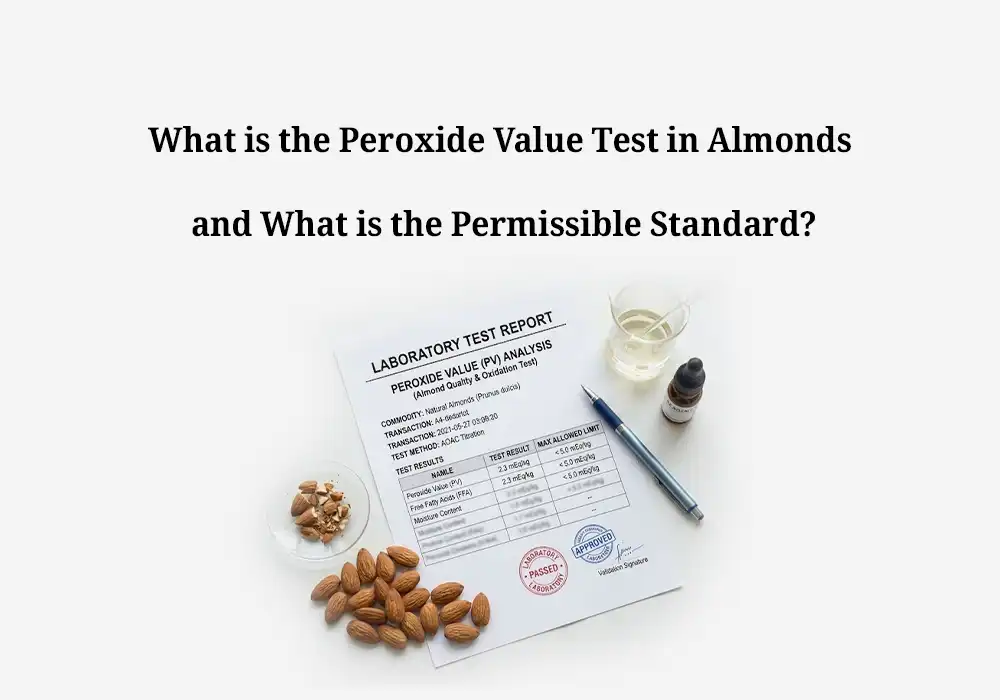
What is the Peroxide Value (PV) Test in Almonds and What is the Permissible Standard? (The Secret of Rancid Almonds)
In the high-stakes world of global dry fruit trading, one of the most agonizing nightmares for an importer occurs when they purchase a container of premium Mamra Almonds at a premium price. After weeks of anxious waiting, the cargo arrives at the destination port. However, instead of a thank-you note, the buyer furiously calls the supplier, shouting: "Your almonds are stale! They taste bitter and smell rancid!"
As the exporter, you might think: "But I bought this cargo completely fresh directly from the farmer! What on earth happened during the journey?" The answer to this bitter mystery is concealed within a single chemical term: Oxidation! And the only reliable method to predict, measure, and prove this catastrophe is a laboratory procedure utilized by customs agencies worldwide known as the Peroxide Value (PV) Test.
In this analytical and story-driven article, we will journey deep inside the fat cells of the almond. We will explore the hidden chemical reactions that occur when almonds are exposed to air and heat, and discover why the Peroxide Value test serves as the ultimate health passport for exporting almonds to strict markets like India.
1. The Mechanism of Spoilage: How are Peroxides Produced in Almonds?
The Saman Mamra almond is recognized globally as one of the richest seeds on Earth, with over 50% of its weight consisting of highly beneficial unsaturated fats and oils. As long as this oil remains safely sealed within the almond's cellular structure, it delivers an incredibly sweet, buttery flavor. To familiarize yourself with the exact percentage of these oils, read the article Standard Kernel Yield & Oil Content of Mamra Almonds.
However, these highly valuable unsaturated oils face a relentless, invisible enemy: Atmospheric Oxygen! When an almond is cracked, or when it is stored in hot and humid conditions, the oxygen in the air chemically bonds with the almond's natural oil. This aggressive chemical reaction generates compounds called "Peroxides."
- What Do Peroxides Do? Peroxides represent the very first stage of lipid degradation (fat rancidity). As the level of peroxides in the almond surges, the natural oil essentially "burns" and spoils. The inevitable outcome of this process is a sharp, musty odor, a soapy and bitter taste, and the complete destruction of the almond's nutritional value.
2. What is the Peroxide Test and What Happens in the Lab?
At the destination customs, quality control officers cannot possibly taste tons of almonds individually to determine if a cargo is fresh or stale! Instead, they rely heavily on the scientific precision of the "Peroxide Value" (PV) test.
The Peroxide Value test is a highly meticulous chemical analysis that measures exactly how much oxygen has bonded with the almond oil, thereby indicating how far the rancidity process has advanced.
- The Procedure: In the laboratory, the oil is extracted from the almond sample and mixed with specific chemical reagents (like potassium iodide). The more rancid the oil is (meaning it contains more peroxides), the darker the chemical solution becomes, and the testing apparatus registers a higher numerical value. This value is universally expressed as "milli-equivalents of active oxygen per kilogram of oil" (meq/kg).
3. What is the Permissible Peroxide Standard for Exports?
International food safety standards (such as the Codex Alimentarius) enforce rigorous limits on peroxide values to fiercely protect consumer health and ensure product quality.
- Perfectly Fresh & Ideal Cargo: The PV number must rest between 0 and 2. This low number indicates that the almond oil is 100% alive, fresh, and buttery, promising an exceptional taste.
- The Warning & Danger Zone: A PV number between 3 and 5. At this stage, the almond is rapidly losing its inherent freshness and must be consumed as quickly as possible before total spoilage.
- Rejected & Rancid Cargo (The Red Line): If the PV number rises above 5 (or above 10 in certain lenient standards), destination customs will seize the container, declaring it "rancid and unfit for human consumption." These almonds possess a harsh, bitter taste, smell strongly of old oil paint, and have a doughy texture. To learn the physical methods of identifying these spoiled cargoes, do not miss reading How to Tell if Almonds Have Gone Bad or Spoiled?.
4. What Factors Cause the Peroxide Value to Explode During Export?
Many traders export genuinely fresh almonds (with a PV below 1) from Iran. Yet, by the time the cargo arrives at the ports of India or the UAE, the PV has astonishingly skyrocketed past 10! The culprit is the catastrophic failure of the supply chain during the oceanic voyage:
- Permeable Plastic and Jute Bags: Utilizing standard woven sacks or cheap plastics that allow air to pass freely subjects the almonds to a relentless bombardment of oxygen throughout the journey.
- The Scorching Heat of Ports: Heat acts as the primary engine driving oxidation. If a container is detained for weeks under the blistering sun of a tropical port (like Mumbai), the rate of peroxide production accelerates by dozens of times.
- Humidity (The Silent Killer): High moisture levels activate destructive enzymes locked within the almond, massively accelerating the rancidity process. To deeply understand the extreme hazards of Indian weather on cargoes, review the article: Preventing Mamra Almond Bitterness in Tropical Indian Warehouses.
5. The Golden Walmondhe Solution for Maintaining Zero Peroxide
Keeping the peroxide value at absolute minimums during a month-long sea voyage requires highly advanced equipment and a profound mastery of food chemistry.
The Walmondhe engineering and trading group, functioning as a primary direct supplier in the Saman region, has definitively solved the peroxide explosion problem for its global clientele:
- True Vacuum Packaging: We extract 100% of the oxygen from our 10-kg export bags! When oxygen is entirely eliminated from the equation, the 50% fat content of the Mamra almond simply cannot oxidize, mathematically guaranteeing that no new peroxides are formed during transit.
- Mechanized Cold Storage: Until the exact moment they are loaded into the shipping container, our cargoes are stored in state-of-the-art, temperature-controlled facilities, providing a written guarantee of their pristine freshness. To familiarize yourself with our direct-supply infrastructure, read Is Walmondhe a Direct Supplier from Saman Farmers?.
To receive free consultation on quality control, customs documentation, and daily pricing for the safest, lowest-PV export varieties including Mamra Almonds and Iranian Moheb Almonds, communicate with our sales department experts through the official channels below:
- Direct & Fast WhatsApp Communication: +989136667618
- Direct Sales Department Telephone: +989136667618