
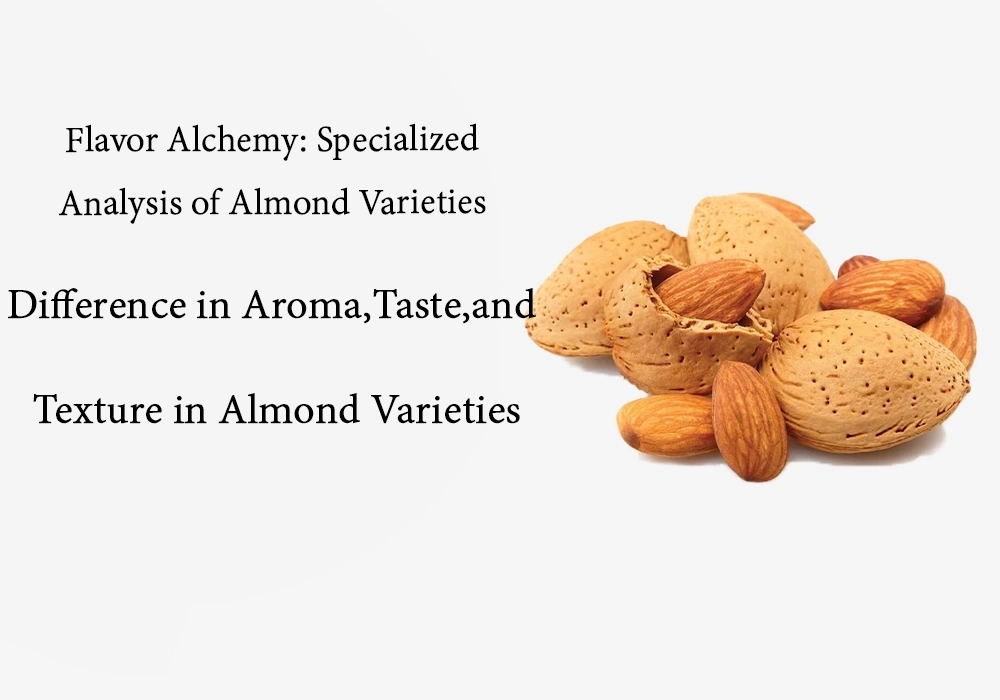
The Alchemy of Taste: A Specialized Analysis of Aroma, Flavor, and Texture in Almond Varieties
Have you ever noticed why some almonds taste like an explosion of richness and sweetness in your mouth, while others—often large and uniform—taste like wood or cardboard? The answer lies not in the appearance of the almond, but in the genetics and the geography where the tree has taken root.
In the world of nuts, "almond" is just a general name. But for us at Walmond, having dealt with various species for years, every almond variety has its own personality, texture, and application. In this specialized article, we intend to dive deep and dissect the subtle differences in taste, aroma, and texture of different almond species to see how the Iranian sun and soil create a miracle in the flavor of this seed.
Why Does Iranian Almond Taste Differ from Foreign Samples? (Climate Impact)
Before looking at almond varieties, we must answer a fundamental question: Why are Iranian almonds known as a luxury and expensive commodity in global markets (especially in India and Europe)?
The secret lies in "Environmental Stress." In modern industrial agriculture (like in California), almond trees are grown mechanically with abundant irrigation to produce a large, water-heavy crop. This reduces the "meat-to-oil ratio." However, in the mountains of Iran, the almond tree fights against nature's challenges (relative water scarcity and rocky soil).
This struggle causes the tree to spend its energy producing a smaller crop but with higher nutrient and oil density. The result? An almond that might be smaller in size, but its healthy fat content—the main factor for taste and aroma—is sometimes up to 20% higher than foreign samples.
Dissecting Taste and Texture in 4 Main Almond Varieties
When buying almonds, you need to know what experience you are looking for. Is the crunchiness under your teeth important, or the high creaminess? Let's put the famous varieties under the microscope:
1. Mamra Almonds; The King of Fat and Crunch
If you are looking for "pure pleasure," there is no competitor to Mamra almonds.
- Taste: Mild sweetness accompanied by a very strong aroma caused by its high fat content (sometimes up to 60%).
- Texture: Very crunchy and brittle. When you break it, it makes a distinct "snap" sound and does not turn into a doughy paste in the mouth.
- Kernel Color: Bright and golden.
- Best Use: As a luxury nut, for export, and medicinal use (due to high nutritional value).
2. Stone Almond (Sangi); The Authentic Taste
This is the almond that the elders used to carry in their pockets. It has a hard shell that protects the kernel from pests.
- Taste: A classic and robust flavor. It might not be as sweet as Mamra, but the "almond profile" is very pure.
- Texture: Slightly harder and denser than Mamra.
- Best Use: Excellent option for roasting (salting), making almond powder, and confectionery, as it withstands heat well without losing flavor.
3. Paper Shell Almond (Moheb/Kaghazi); Convenience and Delicacy
The most popular almond for casual and friendly gatherings.
- Taste: Mild and light. Its fat is balanced, and the flavor feels less "heavy."
- Texture: The kernel is usually softer, and its wooden shell breaks with finger pressure.
- Best Use: As a daily snack and in trail mixes.
4. Bitter Almond; The Forbidden Medicine
Although this almond is not edible (due to the presence of Amygdalin), it is the king of pharmaceutical industries and oil extraction. Its aroma is very pungent and sharp, forming the base of many bitter perfumes and traditional soaps.
The Science of Aroma: What Makes the Almond Smell?
Have you ever noticed that raw almonds have a mild smell, but when exposed to a little heat (Roasting), their aroma fills the whole house? This phenomenon is caused by the release of volatile oils and the "Maillard reaction." In Iranian almonds, due to the high concentration of unsaturated fatty acids, this chemical reaction occurs more intensely.
In Walmond's quality control labs, we noticed that almonds grown in the Zayandeh Rood river margins have a "fruity and woody" aromatic profile that distinguishes them from plain-grown almonds.
Guide to Identifying Fresh Almonds by Taste and Texture
Unfortunately, stale almonds are often sold in the market using various methods (like excessive salting) instead of fresh ones. But as a professional buyer, you should pay attention to these signs:
- The Crunch Test: Fresh almonds must make a "snap" sound under the teeth and break. If the almond feels rubbery or mashes easily, it means it has absorbed moisture and is stale (fat oxidation).
- Trace of Bitterness: If you feel a sharp or bitter taste at the end of chewing (like the taste of crayons), this is a sign of almond oil rancidity.
- Hollow Texture: High-quality almond kernels must be solid. Hollow or shriveled almonds indicate severe water stress or early harvesting.
Why is Walmond Obsessed with "Sorting"?
We know there is nothing worse than eating a handful of sweet almonds, only to have one bitter almond ruin your entire palate. Taste difference is not always about the breed; sometimes, mixing crops causes quality degradation.
At the Walmond collection, the sorting process is done based on size, color, and density to ensure that when you buy "Mamra Almonds," you experience exactly that luxurious and uniform taste, not a mix of different types. Our commitment to quality is the guarantee of real aroma and flavor in your food basket.
Frequently Asked Questions (FAQ)
1. Which almond variety is tastier for children? Paper Shell and Mamra almonds are usually popular with kids due to their sweeter taste and crunchier texture (which is easier to chew).
2. Does roasting almonds destroy their benefits? If the heat is mild, no. However, high heat can damage healthy fats and cause a bitter taste. At Walmond, we suggest eating Iranian almonds raw to sense their real flavor.
3. Why is Mamra almond more expensive than the rest? In addition to its extraordinary taste and fat content, the Mamra almond tree is late-blooming and has a lower yield compared to other breeds; this scarcity, combined with high export demand, has increased its price.
4. What is the best almond for making almond milk? To get thick and creamy almond milk, Stone (Sangi) or Mamra almonds are the best options because they have a high fat content that enriches the milk's texture.
Conclusion
Almonds are not just a simple snack; they are a world of variety, aroma, and taste, each telling the story of its own specific climate. The difference between a regular almond and a premium one lies in details like fat percentage, texture crunchiness, and the aftertaste.
If you, like us, believe that food quality directly affects quality of life, we invite you to try the true taste of authentic Iranian almonds. Let the generous nature of Iran gift you the real aroma and flavor. to check products precisely and choose the best option based on your taste, make sure to visit the Walmond online store at https://walmondhe.com/product/.