
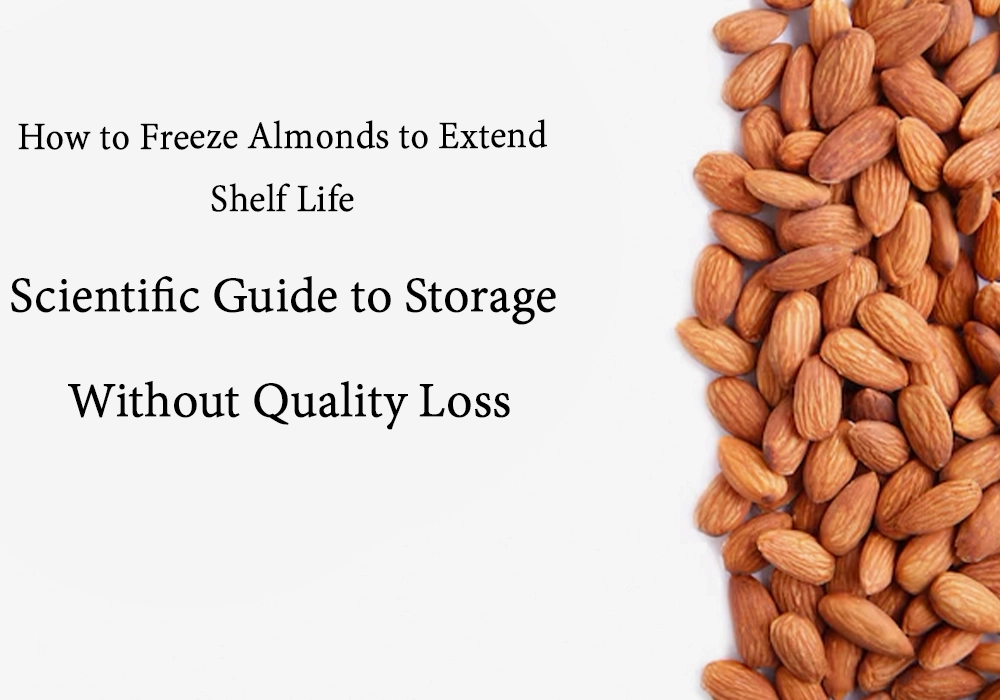
How to Freeze Almonds for Maximum Shelf Life: A Scientific Guide to Preserving Nutrients
Have you ever reached for a snack, eaten an almond, and been hit with a sharp, bitter taste that ruined your appetite? That taste isn’t just bad flavor; it’s a chemical warning bell!
Many Walmond customers who buy in bulk ask us: "If I buy 5kg of almonds, won't they spoil?" The short answer is: Oxidation. Healthy almond fats gradually spoil at room temperature. The good news is: You can extend the life of your almonds from a few months to 2 years with a simple freezing technique, without losing even 1% of their crunch, flavor, or nutrients.
In this comprehensive guide, you will learn the correct way to freeze and thaw almonds, along with the scientific principles of nut storage so you don't waste your money or your health.
The Invisible Enemy: Why Do Almonds Spoil in the Pantry?
Almonds are packed with monounsaturated fats (healthy Omega fats). These fats are like iron that rusts in damp air; they react and spoil (turn rancid) when exposed to three factors:
- Oxygen: Breaks down the chemical structure of almond oil.
- Light: Accelerates chemical reactions and oxidation significantly.
- Heat: Softens the almond texture and makes the flavor sharp and pungent.
When you leave almonds in a regular bowl on the counter, you are practically exposing them to all three enemies. But the "Freezer" is your fortress that stops time for your nuts.
Step-by-Step Guide to Freezing Almonds (Pro Method)
Freezing nuts is different from freezing meat or veggies. Moisture is the enemy of the almond's "crunch." If you want your almonds to be as crunchy as day one after thawing, follow these 4 steps precisely:
1. Choose the Right Container (The Seal of Silence)
Never put almonds in regular thin sandwich bags. Thin plastic is porous; meaning it lets freezer smells (like meat, veggies, or fish) pass through, and your almonds will absorb the smell of frozen onions!
- Best Option: Heavy-duty Ziplock freezer bags or airtight glass containers with rubber seals.
- Vacuum Technique: Squeeze out as much air as possible. If you don't have a vacuum sealer, close the bag up to the edge and suck out the excess air with a straw. Less air means less oxidation.
2. Raw vs. Roasted? It Matters
- Raw Almonds: The longevity champions. Their cellular structure is intact, allowing them to last up to 2 years (or even more) in the freezer.
- Roasted Almonds: Since they have been heated once, their texture is more fragile, and oils have migrated to the surface. Maximum freezer life is 1 year.
3. The Golden Thawing Rule
This is the most critical point! Many people take almonds out of the freezer and open the container immediately. This is a huge mistake.
- Why? When warm room air hits frozen almonds, moisture condenses on the cold almond surface (like water droplets on a cold soda can). This moisture makes the nuts soggy and chewy.
- Correct Method: Take the container out of the freezer and place it on the counter. Do not open the lid. Wait 3 to 4 hours until it reaches room temperature. Now you can open the lid and enjoy nuts that taste factory-fresh.
Storage Duration Chart
How much time do your almonds have? Check this table:
| Storage Location | Raw Almonds (Brown Skin) | Blanched/Sliced | Almond Flour |
|---|---|---|---|
| Pantry (Room Temp) | 2 to 4 months | 1 month | 1 month |
| Fridge | 6 to 12 months | 6 months | 3 months |
| Freezer (-18°C) | 2 Years+ | 1 year | 6 to 12 months |
Note: Inshell almonds (stone almonds) have the longest shelf life but take up a lot of freezer space. Our suggestion is to freeze "almond kernels."
Danger Signs: How to Tell if Almonds are Rancid?
If you found a bag of almonds at the back of the pantry, check for these 3 signs before eating. Eating rancid almonds won't send you to the hospital, but it introduces mild toxins into the body.
1. Visual Test (The Cut)
Cut an almond in half. A healthy center should be milky white. If it is dark yellow or brown and has a honeycomb-like texture, it is oxidized.
2. Smell Test
Rancid almonds smell like old paint, paint thinner, or wet cardboard.
3. Taste Test
A sharp, chemical bitterness (distinct from the natural bitterness of wild bitter almonds, but rather a taste of staleness) indicates oxidized fats.
Health Warning: Oxidized almonds contain free radicals that cause inflammation in the body. If your goal in eating almonds is health, stale almonds do the exact opposite.
Does Freezing Kill Nutrients?
No! Scientific studies have shown that freezing is the least damaging method for nutrients.
- Protein & Fiber: Remain 100% intact.
- Vitamin E: Highly sensitive to heat, but perfectly protected in the cold.
- Healthy Fats: Remain stable in a frozen state and their structure does not change.
Therefore, freezing not only maintains quality but is the best way to "preserve nutrients" for the long term.
Conclusion: Shop Smart
Buying almonds in bulk (e.g., 5kg or 10kg packs) is usually 20% to 30% cheaper. By mastering the freezing method, you can buy high-quality, new-harvest almonds and enjoy fresh, crunchy, and healthy nuts all year round.
If you have empty space in your freezer, start stocking up your healthy pantry today. To buy almonds harvested this year that still carry the scent of the orchard, visit the Walmond store